Virginia Room Digital Collection

Welcome!

The Virginia Room Digital Collection includes photographs, oral histories, books, pamphlets and finding aids to items in the Virginia Room. Continue to check back for new additions.

Browse Items (8431 total)

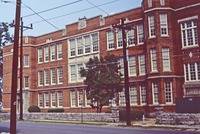
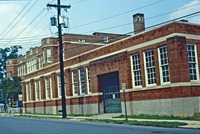
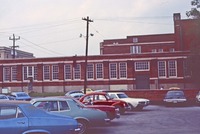
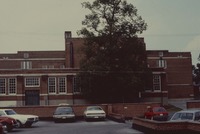
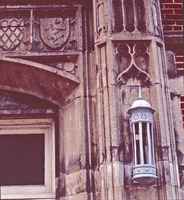
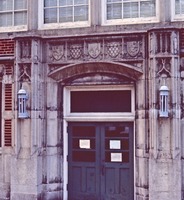
The cornerstone of Willis High School.

Willis High School under construction.

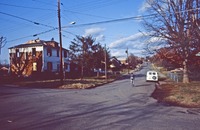
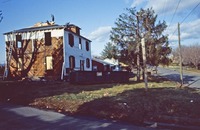
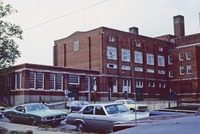
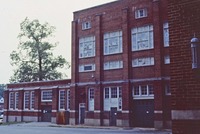
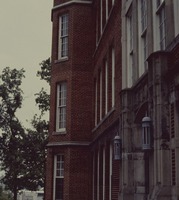
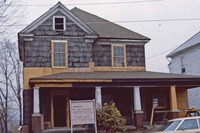
The long abandoned old Mountain Normal School at Willis in Floyd County, VA. The Normal School opened in 1893.

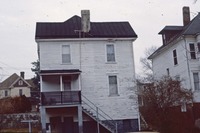
Mountain Normal School dormitory at Willis in Floyd County, VA.

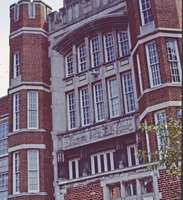
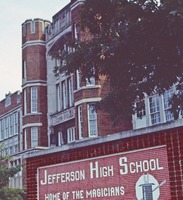
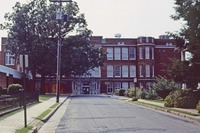
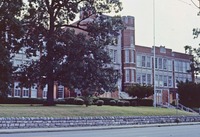
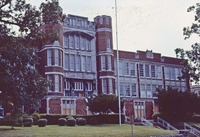
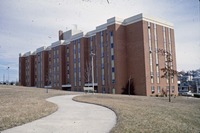
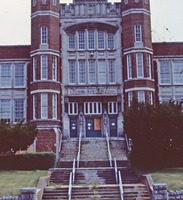
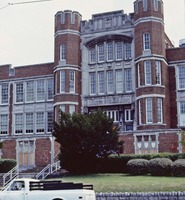
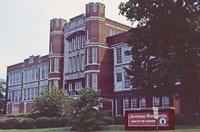
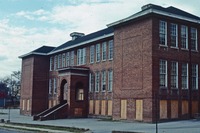
Willis High School in Floyd County, VA. The school closed after the 1961-62 school year.

The Matador is the annual for James Madison Middle School.

The Brigadier is the annual for James Breckinridge Junior High School.

The Brigadier is the annual for James Breckinridge Junior High School.

The Brigadier is the annual for James Breckinridge Junior High School.

The Brigadier is the annual for James Breckinridge Junior High School.

The Brigadier is the annual of James Breckinridge Junior High School.

An index of Roanoke Times obituaries for the years 1960-1965.

An index of obituaries from the Roanoke Times for the years 1955-1959.

Neighborhood Oral History Interview with Ann Turner
Interviewer: Kerri Taylor
Date: 6 April 2017
Location: Ms. Taylor's residence
Duration: 45:26

Neighborhood Oral History Interview with English Showalter
Interviewer: Kerri Taylor
Date: 13 May 2017
Location: Mr. Showalter's residence in Chevy Chase, Maryland
Duration: 1:05:26

Neighborhood Oral History Interview with Stephen Niamke
Interviewer: Kerri Taylor
Date: 19 April 2017
Location: Melrose-Rugby Center
Duration: 54:18

Neighborhood Oral History Interview with Virginia Mignon Chubb-Hale
Interviewer: Kerri Taylor
Date: 10 November 2017
Location: Gainsboro Branch Library
Duration: 8:43

William A. Hunton Branch YMCA

Dr. Harry T. Penn, third from left.

William A. Hunton Branch YMCA

Noel C. Taylor, at podium.

Back of photograph: "Golden Anniversary, High Street Baptist Church."

William A. Hunton Branch YMCA

Back of photograph: "Leo B. Marsh"

William A. Hunton Branch YMCA

Back of photograph: "1957 Football Banquet."

William A. Hunton Branch YMCA

Back of photograph: "1956 Banquet, Father and Son."

William A. Hunton Branch YMCA

William A. Hunton Branch YMCA

William A. Hunton Branch YMCA

William A. Hunton Branch YMCA

William A. Hunton Branch YMCA

William A. Hunton Branch YMCA

William A. Hunton Branch YMCA

Back of photograph: "Education Committee Presentation 1953."

William A. Hunton Branch YMCA

Back of photograph: "YMCA Membership Campaign 1953."

William A. Hunton Branch YMCA

Group photograph in front of Fifth Avenue Presbyterian Church.

William A. Hunton Branch YMCA

Back of photograph: "YMCA Miss Harvey Concert 1952."

William A. Hunton Branch YMCA

William A. Hunton Branch YMCA

William A. Hunton Branch YMCA

William A. Hunton Branch YMCA

William A. Hunton Branch YMCA

William A. Hunton Branch YMCA

At podium: Shirley Stuart

William A. Hunton Branch YMCA

Back of photograph: "Star City Auditorium."

William A. Hunton Branch YMCA

William A. Hunton Branch YMCA

William A. Hunton Branch YMCA Back of photograph: "Father and Son Banquet, Look Almost Alike, 1957."

William A. Hunton Branch YMCA

Back of photograph: "Football Banquet 1957"

William A. Hunton Branch YMCA

Gordon Williams on right.

William A. Hunton Branch YMCA

Back of photograph: "Father and Son Banquet 1968."

William A. Hunton Branch YMCA

William A. Hunton Branch YMCA

Back of photograph: "Father and Son Banquet."

Moorman Heller on left.

William A. Hunton Branch YMCA

William A. Hunton Branch YMCA

William A. Hunton Branch YMCA

William A. Hunton Branch YMCA

William A. Hunton Branch YMCA

William A. Hunton Branch YMCA

William A. Hunton Branch YMCA

African American Baseball Team

William A. Hunton Branch YMCA

Dr. Harry Penn, center, holding glass.

William A. Hunton Branch YMCA

Back of Photograph: "Father and Son Annual Banquet."

William A. Hunton Branch YMCA

Father and Son Banquet

William A. Hunton Branch YMCA

Back of Photograph: "1969 Annual Meeting."

William A. Hunton Branch YMCA

Back of Photograph: "Founders Day."

William A. Hunton Branch YMCA

Back of Photograph: "'56 Father and Son Banquet."

William A. Hunton Branch YMCA

William A. Hunton Branch YMCA

William A. Hunton Branch YMCA

Dr. Harry Penn on right

William A. Hunton Branch YMCA

Back of Photograph: " Father and Son Banquet, November 19, 1957, Star City Auditorium, 6:30 pm."

William A. Hunton Branch YMCA

Back of Photograph: "Father and Son Banquet."

William A. Hunton Branch YMCA

Back of Photograph: "'56 Father and Son Banquet."

William A. Hunton Branch YMCA

William A. Hunton Branch YMCA

Harrison Hale on right

William A. Hunton Branch YMCA

Back of Photograph: "Father and Son Banquet, October 30, 1958."

William A. Hunton YMCA

William A. Hunton Branch YMCA

William A. Hunton Branch YMCA

William A. Hunton Branch YMCA

William A. Hunton Branch YMCA

Boys playing table tennis.

William A. Hunton Branch YMCA

Back of Photograph: "With complements of your President, M. H. Means."

William A. Hunton Branch YMCA

William A. Huntun Branch YMCA

William A. Hunton Branch YMCA

William A. Hunton Branch YMCA

Lucy Addison High School Football game at Victory Stadium.

William A. Hunton YMCA

William A. Hunton Branch YMCA

William A. Hunton Branch YMCA

William A. Hunton YMCA

William A. Hunton Branch YMCA

Parade to Loudon Avenue Christian Church

William A. Hunton Branch YMCA

William A. Hunton Branch YMCA

William A. Hunton Branch YMCA

William A. Hunton Branch YMCA

Lucy Addison High School Band at Victory Stadium.

William A. Hunton Branch YMCA

Loudon Avenue Christian Church

The Patriot is the annual for Patrick Henry High School.

The Roanoke Diamond Jubilee Celebration consisted of a number of special events commemorating the City of Roanoke's 75th Anniversary. This souvenir program includes the schedule of events, lists of participants, historical information, including…

The Patriot is the annual for Patrick Henry High School.

The Patriot is the annual for Patrick Henry High School.

The Patriot is the annual for Patrick Henry High School.

The Patriot is the annual for Patrick Henry High School.

The Patriot is the annual for Patrick Henry High School.

The children's department at Heironimus decorated for Christmas.

A crowd gathers in front of Heironimus on Campbell Avenue to watch the Roanoke Christmas parade.

Throngs of Christmas shoppers at Heironimus.

Exterior of Heironimus decorated for Christmas.

View of the housewares department of Heironimus decorated with a fairy tale motif.

View of the fabric department of Heironimus.

Floor displays at Heironimus for McGregor Menswear

Window display at Heironimus dedicated to the history of Virginia College.

Window display at Heironimus promoting war bonds, featuring Czechoslovakia.

Window display at Heironimus for Calexico Colorama clothing collection at Heironimus. Sign reads, " Calexico Colorama our color-drenched collection of California fashion by Air - Assembled in our newly decorated pation shop, 2nd floor".

Window display at Heironimus promoting products made from California redwoods.

A view inside the children's department at Heironimus.

Window display at Heironimus promoting war bonds, featuring Luxembourg.

Floor displays at Heironimus for the Calexico Colorama clothing line.

Window display at Heironimus for Calexico Colorama clothing collection at Heironimus. Sign reads, " Calexico Colorama our color-drenched collection of California fashion by Air - Assembled in our newly decorated pation shop, 2nd floor".

Christmas window display for children's art supplies at Heironimus.

Displays of tableware at Heirnomimus.

Heironimus Christmas parade float encouraging children to "Go on the air with Santa" on WSLS.

Window display at Heironimus advertising Revlon's Ultaviolet line of cosmetics.

Christmas window display at Heironimus utilizing the editorial written by Virginia O'Hanlon to the New York Sun on 21 September 1897 asking 'Is there a Santa Claus?'. The editorial prompted the reply of one of the paper's editors, Frances Church, to…

Window display at Heironimus for Hara-Kiri robes. Sign reads, "Newest, most popular in Hon. Japanese fashion apparel...authentic ceremonial Hara-robe."

Window display at Heironimus chronicling the history of Norfolk & Western Railway during Roanoke's Golden Jubilee 50th Anniversary.

Window display at Heironimus promoting war bonds, featuring Poland after it was invaded by the Nazis in World War II.

Window display for Revlon's Ultraviolet line of cosmetics at Heironimus.

Peaks of Otter Lodge in the latter part of construction.

The Patriot is the annual of Patrick Henry High School.

The Bell Telephone Company began service in Roanoke on May 19, 1884. In 1895, Bell Telephone introduced long-distance service. That year Roanokers could call Bedford, Lynchburg and Danville.

This view shows strollers atop Mill Mountain. The top of the mountain had park grounds and trails and was a popular destination with the incline and the watch tower.

This interior view of the Martha Washington Candies store shows what the company considered its “Southern Factory.” Martha Washington Candies Roanoke franchise was started by W.G. Baldwin at 310 S. Jefferson Street in 1914. Mr. Baldwin was of the…

Scottie’s Tavern was three miles north of Roanoke on Route 11 and specialized in country ham, chicken and steak dinners. It even offered curb service. J.S. Scott was the manager.

Sanatoriums were popular at the turn of the last century in the care and treatment of tuberculosis patients. Often doctors or others in the healthcare profession would establish homes and other institutions with such a purpose. Tuberculosis often…

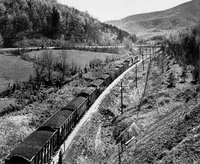
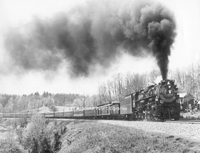
“Memphis Special” made its debut through the Roanoke Valley on June 20th, 1909, running between Memphis, Tennessee, and New York City. The Memphis Special remained for years a popular passenger train, being the fastest and most direct route to New…

The Parkway Motel was located on Route 220, just off the Blue Ridge Parkway, three miles south of Roanoke. The card promoted the motel as having “room telephone, air conditioning, all tile baths, hot water heat, air foam mattresses.” The motel was…

The VA facility erected structures such as the nurses’ home to house medical staff. The first patients were admitted on April 23, 1935. Some of the patients, as a form of therapy, actually conducted farming operations on the grounds of the…

The Class of 1933 contributed funds for the landscaping and drive that made the “High Street Gateway.” The entrance and subsequent drive were made necessary at the time by the large number of students possessing automobiles as well as increasing…

The gymnasium shown here was built in 1930 for a total cost of $138,354. The gym was but one component of a large master plan to expand the college’s facilities. Unfortunately, only the gymnasium was completed on time as the Depression stopped…

Smith Hall, named for a past president of the college, was erected in 1941. Designed by the firm of Eubank and Caldwell in Roanoke, the structure (originally a residence hall for forty women) was built and equipped for a total cost of $50,174.

Bittle Memorial Library was named for Roanoke College’s early president, Dr. David Bittle. Bittle led the college through its move to Salem and during the Civil War. Bittle was one of three Salem leaders who officially surrendered Salem to the…

The Farmers National Bank was organized May 8, 1871, with capital of $75,000. Through the leadership of Salem’s prominent businessmen, the bank weathered successfully economic turbulence that put other banks under during the latter part of the 18th…

Dedicated in 1967 and financed through the sale of bond proceeds, the Salem-Roanoke Valley Civic Center opened as a recreational and cultural center for Salem. Noted historian Norwood Middleton termed this as “the single most talked-about project in…

The filtration plant was an early element in Salem’s water supply infrastructure, but the water supply system itself dated to the 18th century. In 1874, the first concept for a water supply system was advanced to the town council, and in 1875 Salem…

The land on which Municipal Field was located had originally been designed for use as an elementary school site. Further study, however, prompted Salem’s leaders to appreciate its use more for athletics. Thus, in the spring of 1932, Municipal Field…

One of the most notable citizens in the region’s early history was General Andrew Lewis. Though Lewis died before the town of Salem was officially plotted by James Simpson, his life was spent in its general vicinity. This monument was erected in…

Pierpont's Brick Works was owned and operated by Salem businessman George E. Pierpont. In 1908, Pierpont was named as one of the privileged few in Salem to own an automobile.

The construction of a "new" Federal post office on Main Street was a saga of many years. Land purchased by the government in 1917 went undeveloped until 1922 when construction finally commenced. The post office officially opened in June of 1923.

In 1927, Salem businessman Henry A. Oakey purchased the former Hotel Salem and changed its name to Hotel Fort Lewis. The structure was demolished in 1974 .

One of the more contemporary establishments was J.J. Newberry Company. The card boasts, “Completely air-conditioned on two large selling floors, approximately ¾ mile counter space carrying over 30,000 separate items of merchandise. A modern…

In 1911, the Piedmont Glass Company purchased and resurrected the old glass plant. During the early years, the plant employed some 125 workers who produced glass bottles for a variety of uses. The plant was closed for two months each summer due to…

The Sherwood Burial Park, named for the old “Sherwood” estate that was near the property, was developed on a 35-acre tract in 1928 by C.B. Strickler.

The purchaser of this card sent the following message to his brothers: “Your letter received this morning…Father is working for the Virginian R.R. at present…I expect to take an examination for a R.R. mail clerk sometime this fall.” His brothers…

The Homestead Hotel has a long history. Built by David Wade in 1802, it was formerly known as the Old Globe Tavern with five huge fireplaces and 27-inch thick walls. At the time this card was published, it was the only original stage coach tavern…

This was the sanctuary of the First United Methodist Church congregation from 1904 until 1953. It was located on the northeast corner of College and Clay Avenues.

The congregation of Pentecostal Holiness Church was organized in 1915. Their present sanctuary, shown here, on North Bruffey Street was dedicated in April 1953.

College Lutheran Church – This collage shows the various structures associated with College Lutheran. The congregation first met in the Roanoke College chapel (top left) from 1852 until 1858; then they built their first sanctuary (top right) which…

While termed “First” church here, the sanctuary is known as home to the Salem Presbyterian Church located on Main Street. Salem Presbyterian was organized in 1831 and dedicated this sanctuary in 1852. Additions were made in 1914 and 1958.

Known originally as the First Methodist Episcopal Church when organized in 1908, the congregation later was called Second Methodist (1939) and then Central Methodist (1954). The sanctuary shown here was consecrated on June 26, 1955.

The Bethel African Methodist Episcopal Church was started in 1870 and at the date of this card’s printing (1912), it stood on the corner of Water Street and Calhoun.

St. Paul's Episcopal congregation was organized around 1867. The congregation moved a few times before erecting this sanctuary on Main Street in 1911 There have since been numerous acquisitions and additions to the facility.

The Salem Baptist Church was organized in 1870 and dedicated their sanctuary at the corner of North Broad Street and College Avenue in 1873. An educational building was added in 1952. The new sanctuary seen today was erected in 1967.

– The George Washington Carver School was opened in the fall of 1940. The construction cost was $125,000. This new school was in response to the deterioration of the Water Street school

– The “Graded School A” was erected on Water Street as a six-room frame school in 1890-91 (the same year the Academy Street School opened for white students). By 1895, the school had an enrollment of 258 under the principal John Duckwilder.

The architectural drawing gracing this card was done by G.R. Ragan. The new high school, built on Broad Street, opened in 1912, relieving the overcrowded Academy Street school. Additions followed in 1920 and 1923, but the school was heavily damaged…

What is now known as the Academy Street School served Salem’s students for many years. The building on the right was constructed in 1890 with an addition (left) coming in 1895. The original portion served the lower grades and the addition became…

Tuberculosis sanatoriums were numerous in the first half of the last century. By the late 1960s, tuberculosis was controllable and facilities, such as Mount Regis, were converted to other uses usually health related.

Mount Regis was built on Development Hill in South Salem. Mount Regis closed its doors as a sanitorium in 1939. The building was then taken over by the Youth Administration to provide housing for nurses aids in hospitals. After World War II, the…

In 1952, residents of South Salem started a petition drive to incorporate a new town, Mount Regis. This was countered by residents desiring annexation into Salem. With some legal maneuverings and posturing, the “Mount Regis” citizens settled down,…

Tags:

The local chapter of the Daughters of the American Revolution erected in 1927 a monument marking the location of Fort Lewis which had been built by General Andrew Lewis.

The Victorian mansion, known as “Longwood,” was built by Thomas Henry Cooper around 1904. Unfortunately, this majestic structure was destroyed by fire on November 19, 1968.

This hotel stood on Main Street and was erected by W.D.F. Duval in 1871. It contained 40 to 50 rooms with bath tubs and running water. For a few years, the hotel was owned by the Chapman family and renamed the Lucerne.

For many years, Salem had also benefited from passenger service provided by the Virginian Railroad. Virginian passenger service in Salem ended in 1954, five years prior to its merger with the N&W.

Passenger service at the Salem depot ended on April 30, 1965. On that day, YWCA kindergartners boarded the Powhatan Arrow for a trip to Christiansburg. That same year, the N&W donated the station to the town of Salem.

The N&W Railway donated and created a park near the passenger station in 1933 at College Avenue and 8th Street. The park was one of several that were developed in Salem during that time period.

The passenger station hosted a prominent visitor on October 19, 1934, when President Franklin Roosevelt came to dedicate the new Veterans’ Hospital. After the ceremony, the President came to Salem where he was escorted by Salem’s mayor and a cadre…

The impressive home of Salem lawyer Demetrius B. Strouse on Broad Street was built around the turn of the last century. Strouse was involved in numerous civic and religious projects in the Roanoke Valley.

The Ridgewood farm land is today a developed retail corridor, known as the Ridgewood Village Center. The center opened in 1985 with a variety of stores and restaurants. The home, shown here, remains.

Monterey was the pre-Civil War home of the Chapman family. In later years, the home at the corner of High and Clay served as a hotel, hosting visitors by providing a truly residential flavor.

James C. Langhorne was prominent in the formation of St. Paul’s Episcopal Church, helped develop Lake Spring Park, served on the Salem Town Council, and operated several business enterprises.

The Roanoke County Women’s Club was formed on June 7, 1923, by 28 women. In May of 1929, the club formally dedicated their clubhouse. On year later, the Junior Club added a wing to the main clubhouse and started a library. This effort laid the…

The Lutheran Orphanage sold much of its land holdings in the 1960s to Salem for the purpose of erecting what is now the Salem Civic Center. The buildings were sold in 1985 to Roanoke College.

The Lutheran Orphanage arrived in Salem in May of 1896, occupying a brick home on five acres at the corner of present-day Florida Avenue and Boulevard. The orphanage eventually bought the former Hotel Salem on College Avenue (shown here), which it…

Life at the orphanage often paralleled the events within Salem. Some of those were not positive. In 1918, a severe outbreak of the Spanish flu closed Salem’s schools, churches, and businesses for over a month. Sixty children at the Baptist…

The residence for the superintendent was constructed within the first decade of the orphanage’s operation. The residence allowed the superintendent to not only live on the campus but to host visitors and families.

This second cottage to be built for the orphanage was named for the institution’s first superintendent, the Reverend George J. Hobday, who served from 1891 until 1906.

The original 16 acres on which the orphanage sat was donated by businessman John M. Evans. The very first cottage to be built, which was completed on July 1, 1892, was named for the philanthropist.

By 1905, the Baptist Orphanage, which was just a decade old, was caring for 165 orphans. Some were placed in the institution’s care due to loss of parents, while others came to live because their families were impoverished. All needs of the…

The hill-top Baptist Orphanage prided itself on being self-sustaining in its early years. A generous donation of an additional 87 acres in 1897 allowed the orphanage to even operate a full-scale farm and dairy herd.

The cornerstone on the Administration Building was laid on July 4, 1901, becoming occupied in 1902. It’s red-brick castle-like structure was an imposing piece of architecture on the campus. The Administration Building was razed in 1965.

Before the advent of modern medicine, quarantine was often the best strategy to avoid the spread of disease. Salem, like all communities, had to impose its fair share of them. In 1905, the Baptist Orphanage was quarantined for two weeks due to an…

As a measure of Salem’s hospitality, many of the local churches, regardless of denomination, became involved with both the Baptist and Lutheran orphanages. In fact, Roanoke College offered free tuition to qualified students from both orphanages.

The Baptist Orphanage often brought visiting Baptists from around the state to Salem, who, according to the early Salem newspapers, would bring the children into town for entertainment and recreation.

Judge William Moffett convened the first session of Circuit Court in the new court room on April 1, 1910, and dedicated the day “for the hearing of matters and reading of papers of local historical interest.”

This photo postcard shows the old county courthouse. The structure was built in 1841 on a lot purchased by Roanoke County from John Gray of Missouri for $400. The courthouse was constructed by Salem hotelier William C. Williams. During the Civil…

Business leaders in Salem and Roanoke sought to promote their respective communities through a variety of promotional pamphlets. Scenes, such as the one above, were often included to demonstrate progress and prosperity. Salem was labeled as the…

For a few years, Salem’s residential streets were segregated. In 1913, Salem created racially segregated residential districts which were permitted by state law. District No. 1 (centered around Water Street) was for blacks, and District No. 2 was…

Good streets have always been one of the basic services provided by any municipality to its citizens. In 1909, a Salem newspaper headline read, “Good Streets Coming.” The editor was congratulating Salem leaders for applying crushed limestone to the…

Salem’s first major population and economic boom occurred between 1880 and 1890 with the development of the railroad. The population during that decade nearly doubled. The Roanoke Collegian reported in 1891, “Building continues, High Street is…

Main Street has become the setting for one of Salem’s most successful civic and commercial events – Olde Salem Days. The event began in 1981 with an estimated 12,000 visitors. By 1985, under the sponsorship of the Jaycees, “Days” drew some 40,000…

After much discussion, Salem’s city fathers agreed to a streetcar route on Main Street (the tracks can be seen in this card) in 1894. The system served Salem and connected riders to the Roanoke line that crossed over Masons Creek. The streetcars…

On the back of this postcard was written the following message: “Dear Mama – Does this look like home? Not much, I guess you would like it down here because people are so easy going and don’t believe in working all the time…” Home, by the way, was…

Prominent on the left is a sign for W.B. Dillard Drug Co., Prescription Druggists, Soda and Mineral Waters. Watts Dillard was a prominent Salem business man involved in numerous civic projects. His drugstore, at the corner of Main and College, got…

W.G. Ronk took the picture that produced this card of turn-of-the-century Main Street, which James Simpson originally called Roanoke Street. The street was only a few blocks long when first developed, running from present-day Colorado Street to…

Dirt streets and horse carriages marked town living one hundred years ago. In the foreground, one can see the outline of a crosswalk, probably brick, that allowed pedestrians to maneuver across streets avoiding ankle-deep mud that often plagued…

Water Street, later South Broad Street, was one of the earliest streets laid out in the 1802 plot of Salem. Water Street became the dominant center for Salem’s African-American community.

This early street scene illustrates the stately residential developments that marked Salem’s development at the turn of the last century.

This century-old view of Salem showed the development of the town since its inception in 1802 by James Simpson when he created 40 lots on 16 acres. The lots fronted one main road which Simpson named “Roanoke Street.” The lots were two sizes,…

Tags:

Lakeside survived for over six decades, but the competition brought on by other more major theme parks took its toll. By 1983, the park was in financial trouble. Bought by Charles Fox in 1984, the park was struck by the Flood of 1985. The flood…

Aunt Katherine wrote her nephew in Salisbury, Maryland, using this card, the following: “How would you like to go in bathing here? Uncle Frank and the boys are in now. It is fresh water. They have slides and swings and acting bars and every kind…

Lakeside was for many decades the most popular draw for Valley residents and tourists in the region. Offering rides, amusements, recreation, and concerts, Lakeside was complimented by Dixie Caverns, the Blue Ridge Parkway, and being at the…

This card shows how much the park had developed under the ownership of the Roberts family. This card advertises, “South’s Finest Swimming Pool, Joy Rides for Children and Adults, Beautiful Picnic Grounds.”

Like most public venues in the South, Lakeside was not integrated until 1964. At about this same time, park owners closed the pool, filled it over, and the park expanded.

Lakeside survived the Depression by offering low admission prices and cheap entertainment. During World War II, the USO provided servicemen complimentary tickets. There was even a movement in 1958 by nearby residents to constitute themselves as the…

In 1936, Lakeside was purchased by H.L. Roberts, and his family owned and operated Lakeside for the next fifty years. When the amusement park opened it was described as “the largest pool anyone had ever seen,” complimented by a beach of imported…

Lakeside was opened in 1920 by Robert Lynn, Sr., and featured a public swimming pool, roller coaster and one additional ride. The original 50-acre tract on which Lakeside was built was an orchard owned by John Bower.

This card reads, “From the crest of McAfee’s Knob, near Salem, at an altitude of 4,000 feet, and commanding a view of entrancing beauty. ‘Point of Rocks’ projects over the Valley far below. With nearly 2,000 feet of space beneath him, the visitor…

Camp Powhatan was located in the Natural Bridge National Forest Reserve. Scouting, having reached the States in 1910, has a long history in Roanoke County. The Blue Ridge Mountains Council, No. 599, is headquartered in Roanoke County, having merged…

The vast majority of tourist homes, motor courts, motels and other tourist-related businesses dried up after the emergence of President Eisenhower’s interstate highway system. Small towns were bypassed, and routes, such as Route 11, were no longer…

Traveltown, located on Route 11 in Cloverdale, advertised “Every cottage heated with Private Bath.” In the mid-1920s, Route 11 became a link in the Washington-to-San Diego Lee Highway, making it a part of the transcontinental highway system.

The name “Hanging Rock” was given due to the rock formation’s appearance as projecting from the mountainside. In the area of Hanging Rock occurred one of only two Civil War engagements within the bounds of Roanoke County.

This Methodist Church was an early sanctuary of the present-day Thrasher Memorial United Methodist Church. The present sanctuary was built in 1963. The church was named for Paul and Sallie Thrasher, pioneer Methodists in the Roanoke Valley. The…

This fine residence belonged to prominent businessman, J.C. Cook originally of Bonsack. Cook later moved to the Vinton area and owned the land on which the Vinton War Memorial was built.

The Vinton War Memorial is a tribute to the 29 men of Vinton who gave their lives in military service during World War II and Vietnam. The building, seen here, was dedicated in 1948 as a community center and remains such today.

Vinton Baptist Church began in 1892. The building shown in this postcard rendering is one constructed in 1924, replacing the original sanctuary of 1894.

Vinton Roller Mills, along Glade Creek, grew out of mills originally built by David Gish that pre-dated the Civil War. By the Twentieth Century, the remaining mill was owned and operated by James Bowie and produced three kinds of flour. By 1924,…

This camp was originally constructed in 1933 by the Civilian Conservation Corps. In 1941, it became an Army mechanical training camp. From 1943 until 1946, the camp housed 150 German POWs who worked in nearby orchards. Today, the camp is owned and…

The official arrival of the Norfolk and Western Railroad (later Railway) into the Roanoke Valley occurred on June 18, 1882, when an N&W locomotive steamed into the newly-named Town of Roanoke. With the coming of the railroad, the population and…

Exactly what road this might be cannot be determined. Historic records, however, show that interest in building a road from Salem across Twelve O’Clock Knob to Back Creek and then up Bent Mountain dated back to 1840.

One of the most prominent geographical features in the Roanoke Valley is Twelve O’Clock Knob with an altitude of 2,707 feet. According to local tradition, the mountain received its name prior to the Civil War when slaves, working west of Salem,…

Enon Baptist Church is one of the oldest Baptist churches in the Roanoke Valley. Built in 1855 across from the entrance of present-day Hollins University, the church was established by Charles Cocke, president of Hollins Institute.

This view of the women’s quarters shows the west end of the lean-to with lounging room in the center. Catawba ceased accepting tuberculosis patients on January 1, 1972. When it did, records indicated that some 25,000 tuberculosis patients had…

Catawba Sanatorium developed its own nursing school to train healthcare professionals in the treatment of tuberculosis. Between 1912 and 1954, Catawba School of Nursing graduated 258 Certified Tuberculosis Nurses.

Catawba Sanatorium became in many ways a self-sustaining community. For many years, the sanatorium operated its own dairy farm. The number of patients and employees were such that the area soon had its own post office, school, chapel, and other…

By 1937, Catawba Sanatorium was serving some 340 patients and the grounds totaled over 1100 acres, almost double the acreage contained in the original purchase. The many pavilions, such as the one above, were named for Virginia governors.

When Catawba Sanatorium opened in 1909, it consisted of 42 beds located primarily in the old hotel that served the sulphur springs resort area. The sanatorium would expand in both buildings and number of patients significantly over the next few…

The Virginia Building of Catawba Sanatorium was constructed in 1913, four years after the Catawba Sanatorium opened. The original property for the sanatorium had been the Red Sulphur Springs.

The infirmary, constructed in 1910, was named for Susanna Cocke. Utilizing Georgian and Federal architecture, the infirmary was actually the first building included in part of new quadrangle on the southeast section of the campus.

The Bradley Chapel was built in 1883 but not named until the 1930s for Joshua Bradley. The chapel served as the center for campus religious activities. During the early years, Hollins students were expected to attend chapel services daily after…

Presser Hall was erected in 1925, a gift of Theodore Presser, music publisher. Presser was a music professor at Hollins from 1880 until 1883. Unfortunately, Presser died before the building was completed. At the time of its dedication, the…

Construction on East Building began in 1856 and was completed two years later. The East Building, complimenting Main and West, completed the quadrangle courtyard. According to early Hollins historians, East was designed to imitate in appearance the…

The Little Theater was created largely through the spirited giving of Hollins students who, in the 1920s, raised $45,000 toward the total cost of $65,000 for the structure. The theater was built in 1924, replacing an old auditorium that was in the…

The West Building was totally rebuilt in 1890. The left wing contained the infirmary, doctor’s office and faculty living quarters, and the right wing contained two large halls for Hollins’ two early literary societies. The portico, completed in…

The 1920s saw the emergence of student leadership in the affairs of the college. In 1920 a student forum was organized for the purpose of providing input on a variety of issues. One reoccurring issue was dress. Could students wear short skirts,…

The Main Building is one of the oldest structures on the campus. The building was erected in between 1861 and 1863. The day the building was started was the same day Virginia seceded from the Union. With the onslaught of the Civil War,…

When this postcard was sent, Hollins students were on a reinvigorated academic schedule that covered six days. Students could no longer attend for two years and get an “Academic Certificate.” They now must complete all four years. These academic…

The sulphur spring on the Hollins campus was discovered in the early 1800s in the bed of Carvins Creek. The message on this card boasted, “Its water has wonderful curative powers, and many prominent men, among them President Andrew Jackson and…

Early in Hollins’ history, social life for the students was very structured and limited. For example, in 1925 students could receive “gentlemen callers” only on weekend nights and Sunday afternoons. Dates off campus required a chaperone and…

The “new” bridge shown here was built in 1908, replacing an older one. The bridge was part of an extensive landscape plan developed for the campus at the time that consisted of gardens, boardwalks, bridges and recreational areas.

The history of Hollins University actually begins in New York with Joshua Bradley, a Baptist minister. Bradley purchased the property of the defunct Roanoke Female Seminary in 1842 for the purpose of forming an education union to “conduct an…

This is a guide to the A. B. Claytor Collection. The collection contains items related to the Alexander Broadon Claytor and his family. While the majority of the collection is comprised of family photographs, also included are funeral programs, a…

Elva wrote to Albert Reinhold on the back of this card the following: “Received your postal from Washington, thank you so very much. Tell your dear mother that I will write to her tomorrow. This is a perfectly grand day to take a walk. Wish you…

Windsor Court Motel was at 1908 W. Main Street, Salem. Effie Snead was the owner and, at the time the card was published, Charles Snead was the manager.

This motor court was managed by H.R. Poole, who mailed this particular card to Joseph Lang of West Hempstead, NY, with the simple message, “You’re welcome in Virginia.” The establishment lured visitors by claiming “no truck or railroad noise.” Its…

The Goodwin Motel’s postcard boasted “approved drinking water.” The motel was located west of Salem on Route 11, which served for many years as the modern-day equivalent of the interstate.

The sender of this postcard wrote, “Will spend New Years Eve here, rained all day, having a good time. This motel is very comfortable. See you in San Francisco.” The Fort Lewis Tourist Courts was ½ mile west of Salem on Route 11.

The St. Charles Hospital was located at 533 Mountain Avenue. It opened in March of 1913 under the direction of Dr. J.C. Burke. The hospital closed in 1934, and the building was converted into apartments.

This card’s description reads, “One of the bedrooms of the Roanoke Sanitarium, Inc. – Institution for the treatment of Nervous and Mental Diseases, Drug and Alcohol Addictions.”

The Belmont section of Roanoke, long-served by the Christian Church there, began as a 40-home development around 1889. The Belmont School opened in 1893 and soon followed street car service (1905), the city’s first automobile fire steamer (1911),…

A member used this card to celebrate her new church sanctuary: “Our new church cost $15,000, pipe organ $2,650, pews $1,100. Expect to dedicate third Sunday in April.” Unfortunately, the church was badly damaged by a fire in 1917, but recovered.

Belmont Baptist Church was organized on October 17, 1901. They dedicated their second sanctuary in Southeast Roanoke in 1904. Belmont Baptist continues to worship in the sanctuary depicted on this card.

J.H. Marsteller created ornate marble monuments and headstones. This card was produced for Marsteller in 1907, showing on the left the exhibit of Marsteller at the 1907 Jamestown Exhibition’s Timber and Mineral Building. The image on the right shows…

The Masonic Temple was located on the northwest corner of 1st and Kirk Street. In 1915, the street level was occupied by Reams, Jones and Blankenship furniture store. The store’s slogan was “Marry the girl – we’ll furnish the home.”

This card shows how Jefferson Street had changed over the years. This view looks north down Jefferson Street from Mountain Avenue, showing a variety of commercial buildings, apartments and hotels.

The postcard image shows what the vista would have looked like over a century ago atop the famous Mill Mountain Incline. In the bottom foreground is the back side of the old Roanoke Hospital, and in the top distant background one can see the former…

The top image is of the Central YMCA and the bottom image is of the Railroad Department YMCA. The Railroad YMCA opened on November 10, 1903. The Young Men’s Christian Association began in Roanoke in 1883.

Construction of Shenandoah Hospital commenced in 1912, opening the next year. The hospital was located on West Campbell Avenue between 7th and 8th Streets. Dr. J.H. Dunkley was president and assisted by Dr. Ira Huff, Dr. W.S. Slicer, Dr. J.T.…

This interior view of the Martha Washington Candies store shows what the company considered its “Southern Factory.” Martha Washington Candies Roanoke franchise was started by W.G. Baldwin at 310 S. Jefferson Street in 1914. Mr. Baldwin was of the…

The Calvary Baptist Church on Campbell Avenue had as its early sanctuary this beautiful building which was located directly across the street from the present-day facility. Needing more space for the growing congregation and with the completion of…

The Roanoke Times was the first daily paper in Roanoke, having been started by M.A. Claytor in 1886. In 1909, the Times was purchased by J. B. Fishburn, Edward L. Stone, and W.S. Battle and became the Roanoke Times, Incorporated. The Times…

The Jefferson Apartments were built in 1912 on South Jefferson Street. The apartments existed for several decades before being razed in the late 1990s. The site of the apartment building was occupied by a house that was moved across Mountain Avenue…

The Virginia Bridge and Iron Works began in 1888 as the American Bridge Works, changing its name in 1893. Other branch plants were located in Memphis, Tennessee, and Atlanta, Georgia. The Roanoke Branch was involved in hundreds of bridge projects…

This is a guide to the Heller Family Collection. The collection contains items related to members of the Heller family, including: Moorman Pendleton Heller; his wife, Lucy Blanch Robinson Heller; and their son, George Henry Robinson Heller. The…

The Vertical Files and Surname Files Index is an alphabetical list of over 250 topical files. Vertical files may include pamphlets, news clippings and other materials that do not merit a call number, but are arranged for ready reference on a given…

Vendor stalls inside the Market Building.

Shoppers peruse the vendor stalls inside the Market Building.

Shoppers peruse the vendor stalls on the City Market.

Vendor stalls along Market Street on the City Market.

Looking east on Salem Avenue near Wall Street intersection.

Looking north on Market Street toward the Market Building.

An interior view of the Market Building.

Shoppers peruse the vendor stalls on the City Market.

Interior of Market Building after removal of vendor stalls for renovation.

Shoppers peruse the vendor stalls on the City Market.

Shoppers peruse the vendor stalls along Market Square.

A view of vendor stalls along Market Square.

Shoppers peruse the vendor stalls on the City Market.

Boxes of merchandise stacked inside the Market Building. Signs above indicate portion sizes for various items.

An interior view of the meat market inside the Market Building.

Shoppers peruse the vendor stalls on the City Market.

An unidentifed woman shops for flowers at the City Market.

Hams and eggs at a vendor stall outside of theMarket Building.

View of buildings along Campbell Avenue across from the Market Building, including the Roanoke Weiner Stand, Gulf Mills Department Store, and Bob's Shoe Store.

Largely empty stalls inside the Market Building.

Wholesaling operations on Kirk Avenue as seen from Market Street.

A view of Market Square.

A view of the Market Building.

Looking north on Market Street toward Market Square.

Looking north on Market Street.

Col. Holt’s store and house on Bent Mountain. Dr. Hurt’s car is parked in front.

Bessie Beckner (left) and Essie Mae Beckner.

Poages Mill baseball team, #1, R.C. Wertz, #2 O.L. Grisso, #3 John Wertz, #4 Bill Grisso, #5 Ott Wertz, #6 Walt Henry, #7 E.B. Martin, #8 John Bowles, #9 R.C. Henry

Marvin Thompson (sitting on barrel) and Guy Conner in Woodrum Orchard.

Aerial view of Cave Spring High School and Cave Spring Baptist Church.

George M. Burris (right) on a hay wagon, Bent Mountain.

Roanoke Look Out Gift Shop on Route 221 at the top of Bent Mountain.

Aerial view of Roanoke Look Out Lodge Gift Shop along Route 221 at the top of Bent Mountain.

Mr. and Mrs. Maynard Rierson 50th Wedding Anniversary photo.

Maynard Rierson and family.

Rierson’s Store on Route 221.

Flier promoting a music festival at the "new" Back Creek High School.

Flier promoting "Old Time Fiddler's Convention" at Back Creek School.

Temporary Rierson's Store that was used after old store was razed and before new store was built.

Rierson's Store. This was the original store that stood where Back Creek Elementary School stands today on Route 221.

Belleview Primitive Baptist Church on Roselawn Road.

B.G. Finnell, Sr. in front of his store.

Finnell’s Pool on Route 221, near foot of Bent Mountain.

B.G. Finnell & Sons store on Route 221, near foot of Bent Mountain.

L to R: Marvin, Jesse, and Betty Conner picking apples in Thompson orchard on Bent Mountain.

Mormon Church Group at Back Creek.

Bent Mountain Hunting Club. Back row, L to R: Ruben Holt, Dewey Holt, Will Wimmer; Front row, L to R: Ralph Metz, Howard Nichols, Raymond Wimmer

L to R: Nelson Simpson, Omer C. Simpson, Omer C. Simpson Jr., Francis Simpson and unidentified man stacking hay in field. Simpson farm was located on Martins Creek Road.

Omer Simpson (right) with son, Francis, cutting hay. Simpson's farm was located on Martins Creek Road.

Former store of Clem and Mae Conner along Route 221.

Dr. Joseph Gale’s home in Cave Spring, later owned by Dr. White.

Dr. Joseph Gale’s office in Cave Spring.

Dr. Joseph A. Gale, a physician at Cave Spring in 1880s.

Starkey School

Vacation cabin at Laurel Ranch.

Haystacks along Tinsley Lane.

Grisso-Gates School building, located on property of 5321 S. Roselawn Road in Cave Spring.

King Brothers’ saw mill, formerly located in the Bottom Creek area. The mill was powered by steam engine. Logs were hauled to the site by oxen and horses.

Marshal Conner’s Bent Mountain Apple Shed produce stand along Route 221 on Bent Mountain.

Bent Mountain Hunting Club members ready for a hunt, location unknown.

Bent Mountain Hunting Club cabin on Calloway Road, later burned and was replaced with a cinderblock building. Will Wimmer on far right.

Unidentified musicians entertain inside clubhouse of Bent Mountain Hunting Club.

Bent Mountain Hunting Club. The old club building was located on Callaway Road, off of Route 221 just past Blue Ridge Parkway overpass. Standing, L to R: Will Wimmer, C.F. Holt, Walter Overfelt, Dewey Holt, Doug Lancaster, ?, Woodrow Reed, Jake…

Will Wimmer, a farmer at Bent Mountain.

Fletcher Wimmer working on family farm. The Wimmers had large cabbage fields. Their farm bordered the Blue Ridge Parkway near the spur road to Bent Mountain.

Stone’s Union 76 Service Station along Route 221 on Bent Mountain.

Ruby and Allen Stone at Union 76 Service Station along Route 221 on Bent Mountain.

Fralin's Produce along Route 221 on Bent Mountain.

Former Elbe Reed store and Bent Mountain Post Office on Route 221 in process of being razed.

A vacant Bottom Creek Church of the Brethren.

A vacant Christo Evangelical Wesleyan Church in the Bottom Creek area.

“Old” Bent Mountain School.

Bent Mountain Mutual Telephone Company stock certificate.

Allen Stone, Bent Mountain.

Ruby and Allen Stone, Bent Mountain.

Poff’s Garage, Route 221, Bent Mountain.

Ott and Lucy Poage at a dance at Back Creek Elementary School.

Postcard of Cave Spring Baptist Church, showing parsonage and sanctuary.

Henry P. McGuire of Cave Spring in J.L. Dishong fruit and vegetable wagon.

Preston Hartman

Preston Hartman home, Cave Spring.

Back Creek School faculty photo; L to R: Ella Clark Henry, Rufus Henry, Mary Turner.

“40 Acres” home postcard, Bent Mountain.

Roland Ferguson and family in front of their house. The house is located at 5109 Twelve O’Clock Knob Road.

Reno Restaurant card, formerly located in Starkey area on Crystal Creek Road.

Look Out Lodge postcard, Bent Mountain.

Diane Altis on pick-up in Back Creak area.

L to R: Clarence Altis, Mauvieleen Stanley, Ida Stanley, Gaye Stanley. The hill behind them is where the King’s Forest subdivision is today along Route 221.

Stanley Family in snow in the Haran area.

Mauvieleen Stanley on Route 221 in area of Haran Baptist Church.

Back Creek School; L to R: Ethel Stump, Mauvieleen Stanley, Lorene Underwood, Martin Tinsley, Arlene Stanley.

House along Route 221, formerly across from Haran Baptist Church.The Stanley Family moved there in 1943. It was razed in late 1960s.

Lorene Simpson and Polly Rierson.

Play at Poages Mill Church of the Brethren; L to R: Eddy Grisso, Curt Mowles, Norvell Hurt, Dick Agee, Daisy Long

Back Creek Elementary School; L to R: Marie Sloan, ?, ?, Gaynelle Simpson, ?

John and Virginia Walters Austin sitting on front porch of home with grandchildren.

John Philip Austin at his home located across Route 221 from Mt. Union Church of the Brethren. Austin was the first person to have heart by-pass surgery at Roanoke Memorial Hospital.

Group at Bent Mountain School.

Student group at Bent Mountain School, mostly unidentified, though it does contain Virginia Walters and Cassie Fralin

Faculty Group at Bent Mountain School; L to R: Mrs. Lloyd, Mrs. Jones, Mrs. Brook Alderman, ?, Mr. Woods (principal), Ann McGee, Viva Bowles.

Elbe Reed in his store (right) on Route 221. The man at left is unidentified, but possibly a salesman. The store also served as Bent Mountain Post Office.

Snow being plowed at Coles Egg Farm after a big snow on Bent Mountain.

Aerial view of Reed’s Orchard, located at the intersection of Poor Mountain Road and Tinsley Lane. The house was built by the Woodrum Family, bought by Homer Reed in 1948 and closed as a commercial orchard in 1995.

Reed’s Orchard operation at intersection of Poor Mountain Road and Tinsley Lane. The apple packing shed in photo was built in 1933.

1936 Graduating Class of Bent Mountain High School; Standing, L to R: Raymond Carr, George Powell, Homer Reed; Seated, L to R: Elois King, Margaret Jamison

Home of Elbe and Essie Reed, located behind Reed’s Store.

Fralin’s produce stand along Route 221 on Bent Mountain.

Central Baptist Church, Vacation Bible School. Rev. Arnold Williams is in suit at far left.

Harris homeplace along Route 221. It was razed when highway was widened.

Alonzo Lockett in “Dokkie” fez.

Callie Lockett (nee Harris). She did not cut her hair after age 16, as she thought it sinful to do so.

Callie Lockett (seated), L to R: Carol Harris, Alonzo Lockett, Hubert Harris, David Harris, Dorothy Harris

Hubert Harris on Salem Avenue in Downtown Roanoke.

L to R: Alonzo Lockett, Callie Harris Lockett, Pattie Martin at home formerly located across from the old Starkey School.

Sarah and Ballard Martin in front of home. Home is presently located on Shingle Ridge Road, off of Cotton Hill Road. Grandson Damon Martin is in buggy.

Ola Agee Harris and Hubert E. Harris lived in the Starkey area.

Grant Plaza at Cave Spring, located at 3901 Brambleton Avenue.

Roanoke County Book Mobile in front of the Roanoke Count Public Library.

Cave Spring Volunteer Fire Department.

Luther Bell, board of supervisors member representing Cave Spring.

Native American mortar and grinding stone found near Cave Spring, owned by M.A. Janney

Enjoying a spin in a Metz car. L to R: Neva, Vera, Elba, Raymond, and Alton Reed.

Spring at Cave Spring.

Dr. Edward Tinsley ready to start rounds on horseback. His house is in background. Tinsley practiced from 1890 to 1940 in the Bent Mountain area.

Back Creek Elementary School

Bent Mountain Elementary School

Aerial view of Back Creek Orchard Company at foot of Bent Mountain; owned by Woodrum family, R.S. Stearnes, Dr. E.W. Senter, Jack Kefauver and Clinton Craighead

John Henry and Susie (Harris) Grisso.

Unidentified man examining remnants of splintered oak tree struck by lightning on J.H. Grisso farm, the strike of which killed J.H. Grisso

Erecting telephone poles and wire in Back Creek area.

Tags:

Grisso Family, L to R: Ellis Grisso, Mary Grisso, Susie (Harris) Grisso, Price Grisso (small child), John H. Grisso.

Charcoal drawing of Elmore Martin. Martin served with the 28th Virginia Infantry, CSA. He died in the war.

Scene at Woodrum Orchard.

Ben Lewis, resident of Haran area.

Sally Lewis, resident of Poages Mill area.

Ink sketch of Kittinger Chapel, artist unknown.

Haran Baptist Church

Students at Back Creek School.

Haran Baptist Church

Roland Ferguson School, located on Twelve O’Clock Knob Road. The teacher was Mildred (Edd) Bell, sister-in-law of Tom and Luther Bell; #1 is Ocie Ferguson, #2 is Icie Ferguson, #3 is Jim Ferguson

Haran School, front row, L to R: Blanche Ferguson, Robert Ferguson, Billy Bohon, Geneva Poage, Francis Martin, Mae Agee, Mamie Agee, Mina Day, Gladys Bohon, Claude Puckett, Omer Puckett, Floyd Bohon;
Second row, L to R: Lela Jenny, Nellie Ferguson,…

Back Creek High School 4-H Club, L to R: Mildred Bohon, Jane Coon, Josephine Grisso, Geraldine Grubb, Hazel Henderson, Mildred Jones, Sue Lane, Nancy Poage, Sara Lee Poage, Emily Rierson, Cornelia Simpson, Evelyn Webster, Irma Wright

School – probably the old log school house first used for Haran School before larger facility was built.

Mill wheel at Poage's Mill

May Day at Back Creek School, L to R: Catherine Bowling, Frances Grubb, Frances Gill, Lotherine Lavinder (Queen), Josephine Grisso, Evelyn Webster; in the front is crown-bearer Nadine Henderson

Back Creek High School, Junior Class, Front row, L to R: Nancy Poage, Pete Christley, Herbert Henderson, Jr., Norman Lavinder, Mary Bowling; Back row, L to R: Bertha Christley, Carl Wade, Bertha Bohon, Martha Jane Henry

Sophomore Class at Back Creek School: L to R: Billy Agee, Jane Coon, Edmund Chamberlain, Douglas Grisso, Louis Grisso, Hazel Henderson, John Jones, Mildred Jones, Lotherine Lavinder, Sara Lee Poage, Evelyn Webster

School group at old Back Creek School on Landmark Circle in Southwest Roanoke County.

School group at old Back Creek School on Landmark Circle in Southwest Roanoke County.

School group at old Back Creek School on Landmark Circle in Southwest Roanoke County.

School group at old Back Creek School on Landmark Circle in Southwest Roanoke County.

Back Creek School, back row L to R: Bernice Harmon, Charlie Blankenship, Lonzie Janney, Dempsey Grisso, Dean Dores; Second row, L to R: Buster Webster, Edison Likens, Isaac Sutphin, Grover Sink, Harry Cannaday, Grant Christley; Front row, L to R:…

Students at old Back Creek School on Landmark Circle in Southwest Roanoke County.

Stock car racing at Starkey Speedway.

Stock car racing at Starkey Speedway.

Aerial view of Starkey Speedway.

Fruit Growers Telephone Exchange (was also Luther Bell’s store) located on Landmark Circle in Roanoke County.

House across road from Reed's Store on Route 221. The house was formerly the Haran School.

Two unidentified persons at Reed's Store.

Lula Cole Reed, mother of Marvin “Fats” Reed, at Reed’s Store.

Reed's Store at the intersection of Route 221 and Martins Creek Road.

Reed's Store at the intersection of Route 221 and Martins Creek Road.

Cave Spring Baptist Church

Cave Spring Baptist Church

Cave Spring Baptist Church.

Brethren baptism in a creek in Floyd County.

Mount Union Church of the Brethren on Bent Mountain. The original 1896 church building is seen. Rev. Oscar Fike (right) and his parents are on the front steps.

Gas ration stamps from 1945.

“Heading the Barrels” at Doc Ferguson’s orchard. L to R: George Yates, Ben Owens, Mr. Minnix, A. Bohon, Doc Ferguson, Will Hokles, Wiley Lavinder.

Spectators at Back Creek Elementary School for Back Creek baseball game.

Ralph Henry of the Back Creek Baseball Team. Uniform says Finnell’s, as Finnell & Sons sponsored the team.

Present-day residence that was the former Haran School, located at 7910 Bent Mountain Road.

Rendering of original log Laurel Ridge Church by Joey Meador.

Elders of Pigg River Primitive Baptist Association at Basham Church in Stewartsville, Virginia.

Hezekiah Lavinder (seated) and his family at their home (located at entrance to Bridlewood, home still standing) off of Route 221.

Bellview Primitive Baptist Church, located on Roselawn Road.

Laurel Ridge Primitive Baptist Church, located on Roselawn Road.

Baptism of Mary Ann Conner, wife of G.W. Conner, by Elder Leonard Brammer of the Laurel Ridge Primitive Baptist Church, at Fralin home.

Reed’s Store at the intersection of Route 221 and Martins Creek Road.

Reed’s Store at the intersection of Route 221 and Martins Creek Road.

Interior of Reed's Store, located at the intersection of Route 221 and Martins Creek Road.

Reed’s Store after the 1948 addition of Dairy Diner, located at the intersection of Route 221 and Martins Creek Road.

Reed’s Store at the intersection of Route 221 and Martins Creek Road.

Marble players at Bent Mountain School. L to R: Hilton King, Herbert Craighead, Namon Conner, Arnold Mills, Melvin Manning (school champion), Harold Thompson, Fletcher Wimmer.

May Court at Bent Mountain High School. May Queen (far right) is Carrie Marie Bell; Maid to the Queen (second from right) is Mamie Logan; crown bearer is John Poff, flower girl is Jean Ferguson; Maids are Laura Metz, Bertha Janney, Betty Sisson,…

Mount Olivet Baptist Church on Route 221, Bent Mountain.

Col. Fletcher Holt in his store on Bent Mountain.

Clyde Bohon, who bought Holt’s Store on Bent Mountain.

Col. Fletcher Holt with a snake around his neck. Holt was a taxidermist on Bent Mountain

Home of Dr. E.O. Tinsley on Bent Mountain. The home was called “Sunny Side”. Tinsley’s office was located on right, front corner of porch. The home was on Tinsley Lane. It was razed in the 2000s.

Ruby Holt in front of Holt’s Store on Bent Mountain.

Emily Bohon and Bessie Brown

Mary Catherine Sloan Poage

Kittinger Chapel was located on Landmark Circle in Roanoke County. It was razed in the early 2000s.

Students and teachers in front of Back Creek School.

Students and teachers in front of Back Creek School.

Mary Catherine “Molly” Poage, Sara Poage (standing, left), Harvey Poage (standing, right), Lee Poage (on lap).

Haran Baptist Church

Lucy Dyer Poage, Molly Gregson, Jeff Gregson, making apple butter at home in the Poages Mill area.

James C. Fralin being baptized in Back Creek at Poages Mill in 1925 by Chris Eller, Brethren minister.

Hubert Earl Harris & Ola Agee Harris lived where Starkey ball fields are today.

Ballard P. and Sarah Martin

Hubert Earl “Hub” Harris.

Look Out Lodge postcard, Bent Mountain.

Sarah and Ballard Martin in front of home. Ballard was a carpenter and farmer.
Output Formats

atom, dc-rdf, dcmes-xml, json, omeka-xml, rss2