
Browse Items (8426 total)
Sort by:
Stonewall 1999
The Stonewall was the annual for Stonewall Jackson Middle School.
Stonewall 2000
The Stonewall was the annual for Stonewall Jackson Middle School.
YMCA 073
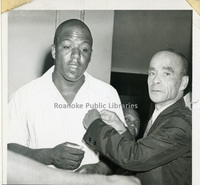
William A. Hunton Branch YMCA
YMCA 074
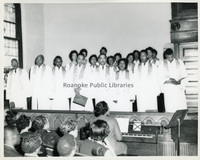
William A. Hunton Branch YMCA
YMCA 075
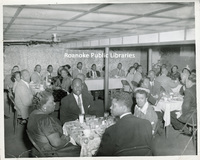
William A. Hunton Branch YMCA
YMCA 076
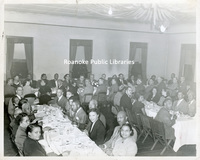
William A. Hunton Branch YMCA
YMCA 077
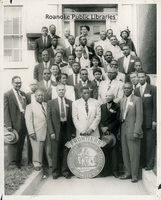
William A. Hunton Branch YMCA
YMCA 078
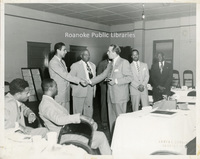
William A. Hunton Branch YMCA
YMCA 079
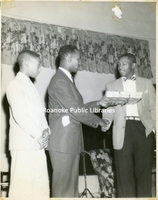
William A. Hunton Branch YMCA
Back of photograph: "1967 Father and Son Banquet, father and son who look alike."
Back of photograph: "1967 Father and Son Banquet, father and son who look alike."
YMCA 080
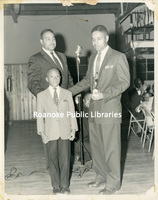
William A. Hunton Branch YMCA
Back of photograph: " Father and Son Banquet."
Back of photograph: " Father and Son Banquet."
YMCA 081
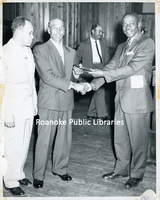
William A. Hunton Branch YMCA
Back of photograph: Father and Son Banquet 1960."
Second from Left: Mr. Bean Sr., Winner of the Award for Oldest Son Present
Second from Right: Lewis Peery
First on Right: Walter Wheaton
Back of photograph: Father and Son Banquet 1960."
Second from Left: Mr. Bean Sr., Winner of the Award for Oldest Son Present
Second from Right: Lewis Peery
First on Right: Walter Wheaton
YMCA 082
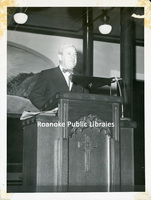
William A. Hunton Branch YMCA
YMCA 083
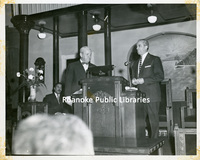
William A. Hunton Branch YMCA
Dr. Harry Penn on right and Dr. F. W. Claytor on far right, seated.
Dr. Harry Penn on right and Dr. F. W. Claytor on far right, seated.
YMCA 084
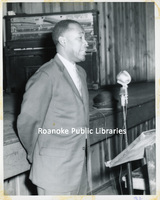
William A. Hunton Branch YMCA
Back of photograph: "L. B. Allen, Father and Son Banquet 1962."
Back of photograph: "L. B. Allen, Father and Son Banquet 1962."
YMCA 085
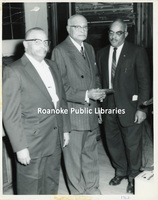
William A. Hunton Branch YMCA
Back of photograph: Oldest Father, Father and Son Banquet 1962."
Middle: Mac Barlow
Back of photograph: Oldest Father, Father and Son Banquet 1962."
Middle: Mac Barlow
YMCA 086
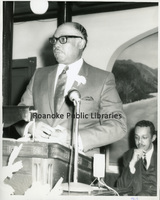
William A. Hunton Branch YMCA
Back of photograph: "1969 Annual Meeting."
Back of photograph: "1969 Annual Meeting."
YMCA 087
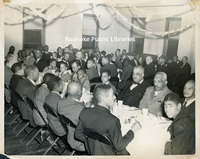
William A. Hunton Branch YMCA
YMCA 088
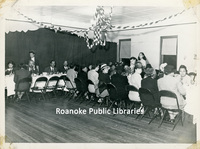
William A. Hunton Branch YMCA
YMCA 089
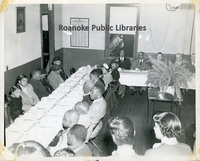
William A. Hunton Branch YMCA
YMCA 090
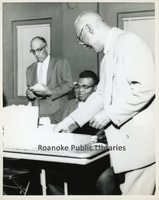
William A. Hunton Branch YMCA
YMCA 091
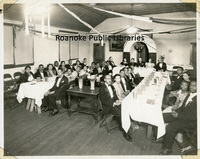
William A. Hunton Branch YMCA
YMCA 092
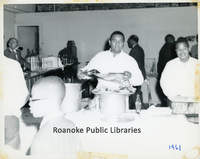
William A. Hunton Branch YMCA
Back of photograph: "Father and Son banquet 1961."
Back of photograph: "Father and Son banquet 1961."
YMCA 093
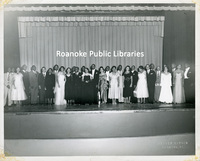
William A. Hunton Branch YMCA
Sixth from Left: Dr. E. D. Downing
Eighth from Right: Dr. Harry Penn
Sixth from Left: Dr. E. D. Downing
Eighth from Right: Dr. Harry Penn
YMCA 094
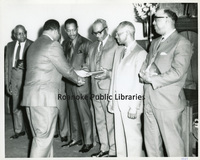
William A. Hunton Branch YMCA
Back of photograph: "Awards 1969 Annual Meeting."
Back of photograph: "Awards 1969 Annual Meeting."
YMCA 095
William A. Hunton Branch YMCA
YMCA 096
William A. Hunton Branch YMCA
YMCA 097
William A. Hunton Branch YMCA
YMCA 098
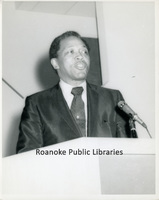
William A. Hunton Branch YMCA
YMCA 099
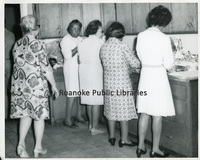
William A. Hunton Branch YMCA
YMCA 100
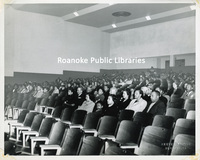
William A. Hunton Branch YMCA
YMCA 101
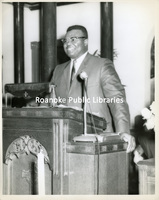
William A. Hunton Branch YMCA
YMCA 102
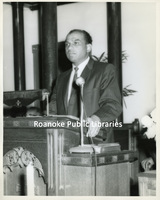
William A. Hunton Branch YMCA
Pioneer 1939
The Pioneer was the annual for Andrew Lewis High School.
Pioneer 1941
The Pioneer was the annual for Andrew Lewis High School.
Pioneer 1942
The Pioneer was the annual for Andrew Lewis High School.
Pioneer 1948
The Pioneer was the annual for Andrew Lewis High School.
Pioneer 1949
The Pioneer was the annual for Andrew Lewis High School.
Pioneer 1957
The Pioneer was the annual for Andrew Lewis High School.
Pioneer 1958
The Pioneer was the annual for Andrew Lewis High School.
Pioneer 1959
The Pioneer was the annual for Andrew Lewis High School.
Pioneer 1960
The Pioneer was the annual for Andrew Lewis High School.
Pioneer 1964
The Pioneer was the annual for Andrew Lewis High School.
Pioneer 1965
The Pioneer was the annual for Andrew Lewis High School.
Pioneer 1971
The Pioneer was the annual for Andrew Lewis High School.
A Guide to the Mignon Chubb-Hale Collection

This is a guide to the Mignon Chubb-Hale Collection. The collection contains items related to Mignon Chubb-Hale. While a majority of the collection is comprised of photographs of Chubb-Hale’s sixth grade classes at Lincoln Terrace Elementary School,…
Ruffner Rock 1971
The Ruffner Rock was the annual for William Ruffner Middle School.
Ruffner Rock 1972
The Ruffner Rock was the annual for William Ruffner Middle School.
Ruffner Rock 1973
The Ruffner Rock was the annual for William Ruffner Middle School.
Ruffner Rock 1974
The Ruffner Rock was the annual for William Ruffner Middle School.
Ruffner Rock 1978
The Ruffner Rock was the annual for William Ruffner Middle School.
Pioneer 1974
The Pioneer was the annual for Andrew Lewis High School.
Pioneer 1975
The Pioneer was the annual for Andrew Lewis High School.
Accolade 1957
The Accolade is the annual for Cave Spring High School.
Accolade 1958
The Accolade is the annual for Cave Spring High School.
Accolade 1960
The Accolade is the annual for Cave Spring High School.
Accolade 1961
The Accolade is the annual for Cave Spring High School.
Accolade 1962
The Accolade is the annual for Cave Spring High School.
Accolade 1963
The Accolade is the annual for Cave Spring High School.
Accolade 1964
The Accolade is the annual for Cave Spring High School.
Accolade 1965
The Accolade is the annual for Cave Spring High School.
Accolade 1966
The Accolade is the annual for Cave Spring High School.
Accolade 1968
The Accolade is the annual for Cave Spring High School.
Accolade 1970
The Accolade is the annual for Cave Spring High School.
Accolade 1971
The Accolade is the annual for Cave Spring High School.
Accolade 1972
The Accolade is the annual for Cave Spring High School.
Accolade 1973
The Accolade is the annual for Cave Spring High School.
Accolade 1974
The Accolade is the annual for Cave Spring High School.
Accolade 1975
The Accolade is the annual for Cave Spring High School.
Accolade 1976
The Accolade is the annual for Cave Spring High School.
Accolade 1977
The Accolade is the annual for Cave Spring High School.
A Guide to the William Trippeer Genealogical Collection
The William Trippeer Genealogical Collection is housed in 2 record storage boxes. The main families included in this collection are Nelms, Dameron, Dickenson, Berger, Trippeer, Mowbray, Edwards, Gaeb, and Fenimore. Materials which comprise the…
A Guide to the Gainsboro Library Vertical File Miscellaneous Items Collection

The Gainsboro Library Miscellaneous Items Collection is comprised of items that are too large for standard vertical file storage or need special considerations due to format. These items are considered part of the Gainsboro Library Vertical Files…
Ruffner Rock 1975
The Ruffner Rock was the annual for William Ruffner Middle School.
Ruffner Rock 1976
The Ruffner Rock was the annual for William Ruffner Middle School.
SF001 Church Avenue Bus Depot
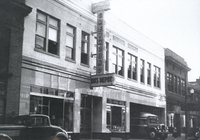
Bus depot, formerly located at 16 West Church Avenue.
HNWR001
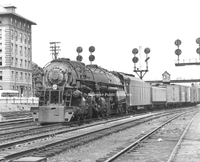
Locomotive No. 1219 arrives in Roanoke. The Class A was considered to be one of the "Magnificent Three" designs developed by a Norfolk & Western team headed by J.A. Pitcher, G.P. McGavok, and C.H. Faris. The Class A would break all previous…
HNWR002
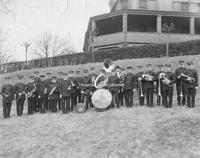
Amongst the clerks, boilermakers, carpenters, mechanics, and engineers were a slew of instrumentalists, singers, song writers, and composers. Together, they formed the Roanoke Shop Band. Here the band stands on the grounds of the Hotel Roanoke. …
HNWR003
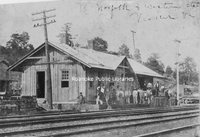
The carpenter crew has almost completed work on the station at Vicker, Virginia in this photo. Carpenters built everything from depots to boxcars and cabooses, to the finished interiors of passenger coaches.
HNWR004
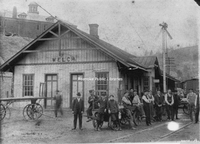
This photograph captures the station and crew at Welch, West Virginia. It is believed that the building in the background is the courthouse. Notice the freight car to the left.
HNWR005
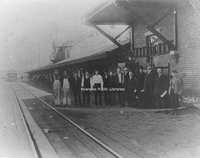
Here is the Old Yard Office located upstairs from the N&W Passenger Station at Radford. Pictured from right to left are Zince, Stump, E.E. Allen, Lawrence Allen, Louis Lucas, Horace Price, Tom Heslep, H.A. Hall, J.C. Turner, O.C. Charlton, J.H.…
HNWR006
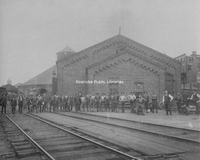
Employees at the N&W roundhouse in Lynchburg. While Lynchburg served as the divisional point for the N&W during its first few years, increased coal and ore traffic caused the N&W to move its divisional points farther west in 1888.
HNWR007
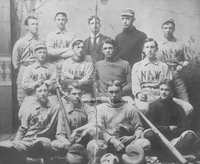
Working for the railroad was not always about work. Here is the 1895 N&W General Office Building Baseball Team. Team members are from left to right: (front row) ? Coleman, Winfree Reed, Max Howe, and G.F. Butler; (middle row) Harry Moore, Garnet…
HNWR008
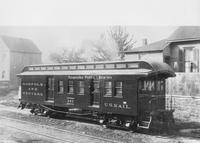
An early N&W mail car. The N&W purchased the car, which was built in 1892. Railroads were a popular and effective way to distribute mail around the country. Clerks aboard the cars would actually cancel the letters en route with the initials RPO,…
HNWR009
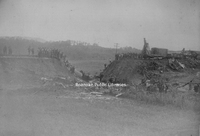
On July 2, 1889, a night storm swelled Wolf Creek near Thaxton, Virginia, which rose out of its banks just as passenger train No. 2 was crossing. The situation became N&W's first major disaster. There was only one survivor, trainmaster James…
HNWR010
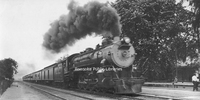
An N&W passenger train speeds between Roanoke and Christiansburg, Virginia. The N&W provided extensive passenger service through southwestern and southeastern Virginia, the Shenandoah Valley, West Virginia, and into parts of North Carolina. With…
HNWR011
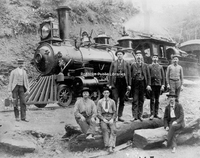
This photograph of the crew of Engine No. 82 was taken when Goodwin, West Virginia was a western terminus. The engine was standing on the Wye track. Crew members are S.D. Clowers, engineer; R.S. Brown, engineer; James Emmons, fireman; George…
HNWR012
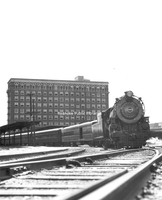
Engine No. 500 pulls out of Norfolk with the Pocahontas. The Pocahontas' maiden run occurred on November 21, 1926, when she ran between Norfolk and Columbus, Ohio. That run replaced the former "Norfolk-Chicago Express".
HNWR013
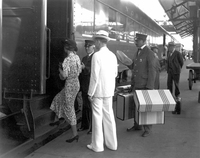
Passengers board an N&W coach. Passenger service when into a steep decline after the mid-1940s. In 1946, for example, the N&W carried 3.4 million passengers. By 1950, that figure was about 900,000. The automobile was taking its toll on the…
HNWR014
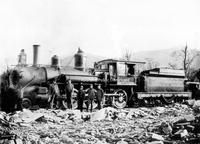
The crew of Engine No. 102, shortly after the engine was taken over by the N&W, included Conductor Lawrence Boyles, Engineer George Agee, Fireman Harley Pugh, and Brakeman Jesse Honaker and R.C. Warden.
HNWR016
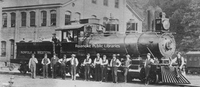
This photograph captures a proud moment in the development of the N&W. Rolled out from the shop is the first locomotive built by Roanoke Machine Works. Roanoke Machine Works would later become the N&W Roanoke Shops. The engine is a Class I.
HNWR019
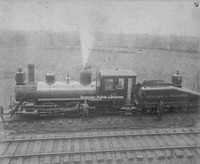
This photograph was taken at east Radford coal wharf. It depicts Engine No. 138 and crew. Mr. Akers, engineer; Charlie Roby, fireman; Mr. Allen and Mr. Adkins.
HNWR020
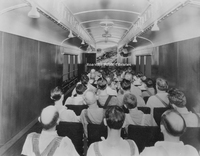
Rail workers watch a safety film inside the N&W's motion picture car.
HNWR021
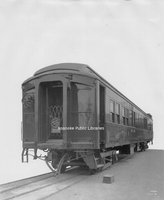
In the late 1920s, the N&W developed a new strategy in rail safety education - the motion picture car. Carrying the "Safety First" logo, the car traveled various rail lines of the N&W as a mobile classroom for the purpose of providing safety…
HNWR022
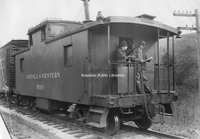
The caboose functioned in may was as the train's office. Often train orders and other paperwork were handled aboard the caboose, which come on the scene in the late 1800s to serve as living quarters as well as an office for the crew. With the…
HNWR023
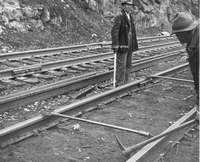
A foreman gauges track to make certain the distance between the rails is exactly 4 feet, 8 inches. In 1883, the N&W operated primarily on a 5-foot gauge; however, on June 1, 1886, the N&W and other southern railroads adopted the now-standard gauge…
HNWR024
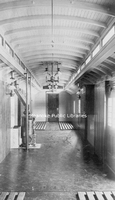
This photograph shows the interior of a 52-foot long baggage and express car built in 1892. Notice the hanging oil lamp and stove at the mid-point.
HNWR025
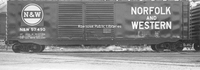
Commonly called the "boxcar", this particular model was used by N&W in 1960. The small numbers along the side under the logo indicated its hauling capacity, weight and load limits, measurements, when it was built, and when it was most recently…
HNWR026
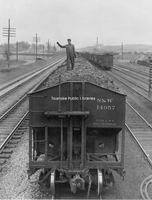
A hopper with coal is ready to go. 1970 was the peak for N&W coal traffic, when the railway carried 90.6 million tons of coal. While coal was profitable, it was not always a source of revenue. Floods, miner strikes, and other labor disputes cut…
HNWR028
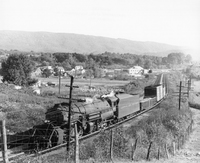
Engine No. 2165 is northbound near Waynesboro, Virginia, hauling a small but varied freight load.
HNWR029
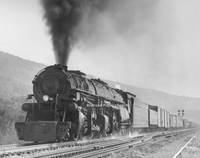
A freight train pulled by Engine No. 1228 moves eastbound near Bonsack.
HNWR030
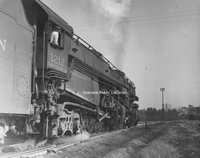
Locomotive No. 1212 pulls a load in a scene of the past: a steam engine at work. The N&W was the last major American railroad to abandon the steam engine in favor of the diesel engine. The designers and engineers of the N&W developed the steam…
HNWR031
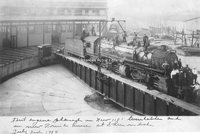
Engine No. 1442 is placed on the new 115-foot turntable and in the new roundhouse of the Shenandoah Division. For this moment, the men of the roundhouse take a break to pose in recognition of achievement.
HNWR032
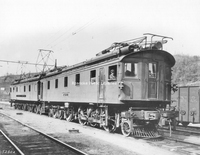
Electric engines acquired by the N&W were from Baldwin-Westinghouse. There were 16 locomotives in all. The system, including overhead catenary wires and a generating plant, was completed in 1916. Engine No. 2506 makes the Bluefield run. In 1950,…
HNWR033
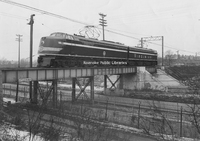
This electric locomotive, Engine No. 126, was from the Virginian Railway. The Virginian was formed by Henry Rogers for $30 million in 1907. Having made his fortune in oil, Rogers died a month after the Virginian was officially formed and his…
HNWR034
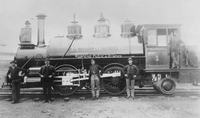
Engine No. 1 was the switching locomotive used at the Roanoke Machine Works (later Roanoke Shops) in 1886. Standing in the cab of the engine is H.S. German. Others, from left, are Brakemen W.H. Hall and W.W. Rule, Engineer Paul DeArmond, and…
HNWR035
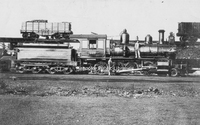
Engine No. 345 was the first compound engine owned by N&W. This photograph was taken at Crewe, Virginia. Crew members include A.D. Lane, engineer, and Julian Hark, fireman.
HNWR036
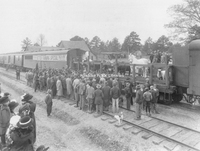
During the first part of the 20th Century, N&W tried to cultivate agricultural products and freight as possible revenue. Rail agents often advertised farmland near N&W depots to encourage such activity. Here a "farm train" stops as men gather…
HNWR037
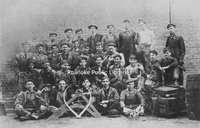
The railroad employed a number of young boys to serve as apprentices during the advent of child labor laws. This photograph shows the Roanoke Shops machinist apprentices. A young apprentice would work a 10 hour day and often overtime on weekends. …
HNWR038
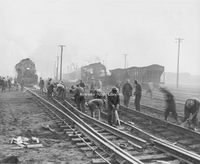
This photograph shows track crews at work along the N&W line. Track laying and maintenance was an awesome undertaking, given the thousands of miles of track owned and operated by N&W. Only in the middle part of the 20th Century did track work…
HNWR039
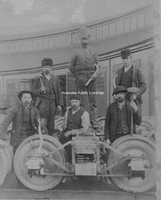
Unidentified employees at the Roanoke roundhouse pose with locomotive wheels. Notice the various tools each is holding, which suggest the different types of work done at the roundhouse.
HNWR040
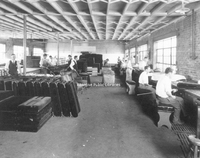
N&W employed a wide variety of skilled laborers. In this photograph, upholsterers in the Roanoke Shops prepare seats for passenger coaches. In addition to outfitting trains, the upholstery shop also fitted office furniture and some items for the…
HNWR041
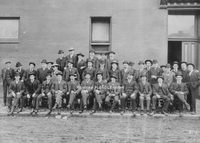
Roanoke Boiler Shop employees at the corner of Salem Avenue and Commerce Street. Pictured from left to right (front row): Frank Bianchi, T.D Equi, John Griffin, P.E. Lawhorn, F.H. Wigmore, George Leisinger, T.J. Murray, James Conway, Edward Irvin,…
HNWR042
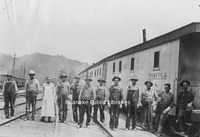
Carpenter Force No. 1, Pocahontas Division at Richlands, Virginia. From left are R.L. Sorah, J.A. Dye, Dayton Henderson, O.J. Lawson, R.L. Maxwell, J.D. Farmer, T.R. Stinson, S.T. Sparks, G.W. Petts, E.W. Clay, A.G. Quillen, R.H. Honaker. Notice…
HNWR043
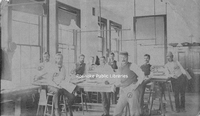
Drawing room employees in the N&W office building. Pictured from left are: John Worthington, Charles Jacobsen, James Woods, Fred Scuiffer, two unidentified, George Worthington, Otis Bellingrodh, Servelius Bisphan.
HNWR044
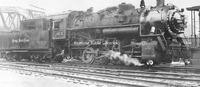
This history of the Nickel Plate Railroad is an amassment of histories from other lines, such as Lake Erie and Western, Clover Leaf, and the Wheeling and Lake Erie. The Nickel Plate was officially the New York, Chicago, and St. Louis Railroad…
HNWR045
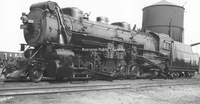
Like many railroads, the lines of the Wabash Railway Company predated the company's formation in 1877. The history of the Wabash is long and complicated, involving certain dubious personalities, mergers, receiverships, and a wavering bottom line. …
HNWR046
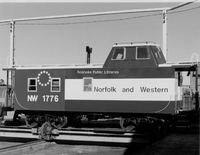
In addition to Engine No. 1776, N&W also had painted certain cars within their rolling stock to highlight the Bicentennial. Here a caboose wears the nation's colors.
HNWR048
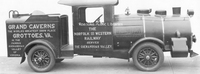
Public relations was not always left to copy editors and high-ranking N&W officials. This photograph shows a "train" built by the men at the Roanoke Shops for advertising purposes.
HNWR049
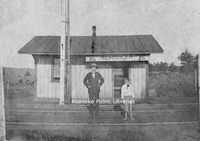
The station at Schooler, Virginia was operated by W.H. Cord (left). The small station operated from March 1883, when coal first began to move from Pocahontas to Norfolk, until 1900 when the station was bypassed by new track. The young man in the…
HNWR050
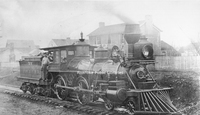
Locomotive No. 37 was used in 1871 when the South Side, Norfolk and Petersburg, and Virginia and Tennessee Railroads were consolidated, forming the Atlantic, Mississippi and Ohio Railroad. The AM&O was the forerunner of N&W.
HNWR051
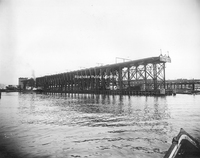
Coal Pier 4 at Lamberts Point. The pier served N&W for nearly half a century.
HNWR052
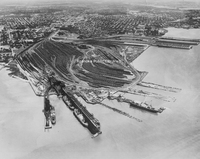
This aerial view shows the N&W coal piers at Lamberts Point. Coal Pier 4 (center) was built in 1914. At the time of its initial construction, the pier was 1,200 feet long, 70 feet wide, and 90 feet above the water. It could empty 600 cars per day.…
HNWR053
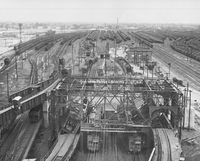
At Coal Pier 4 at Norfolk, hoppers are dumped into pier cars which carry coal to the loading shutes. In the background is a portion of N&W's 12,000 car classification and storage yards.
HNWR054
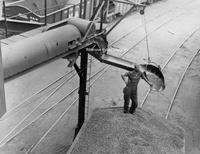
Coal quickly became N&W's leading freight commodity. Here an employee loads an N&W hopper with coal.
HNWR055
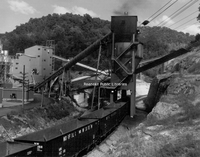
N&W hoppers at a West Virginia coal tipple are loaded for their eastbound trip to Lamberts Point near Norfolk. In 1883, N&W moved nearly 106,000 tons of coal. A century later, N&W moved 75 million tons annually.
HNWR056
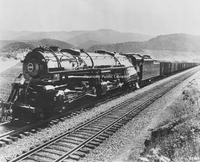
Engine No. 1200. As part of the Class A engines, No. 1200 was the first to be built by N&W between 1936 and 1950. Maximum horsepower was 6,300 at 45 miles per hour.
HNWR057
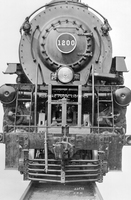
Front view of Engine No. 1200, a Class A built in 1936.
HNWR058
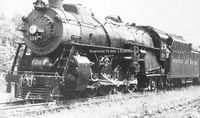
Engine No. 114 was a member of the K-1 Class of N&W locomotives. This class of engine, numbering 100 to 115, was built between 1916 and 1917. The Class K engines were built to pull more weight since new steel passenger cars were replacing those…
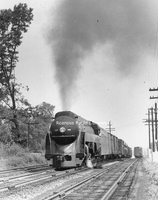
HNWR059
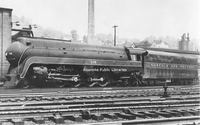
The sleek, Class K-2, Engine No. 118 was acquired by N&W in 1919. These engines, numbering 116 through 125, were rebuilt later and streamlined by N&W.
HNWR060
Steam Engine No. 130, a Class K-2A locomotive.
HNWR061
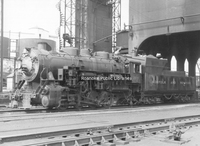
Engine No. 209.
HNWR062
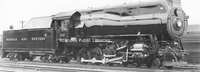
The Class M Engine No. 1112 was built in 1910. Their purchase was almost solely in response to the increased demands for hauling coal.
HNWR063
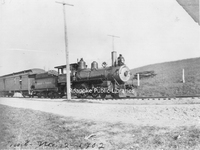
Engine No. 37 was a Class N, as were all engines numbered 28 through 37. These engines, purchased by N&W, were made between 1887 and 1888. This photograph was taken at Wakefield, Ohio.
HNWR064
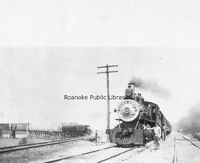
Engine No. 76 was a Class U engine. On the N&W line, these engines were numbered 71 through 85.
HNWR065
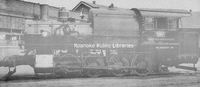
Engine No. 800 was an N&W Class W-6. These engines, numbered 800 through 814, were made between 1898 and 1899.
HNWR066
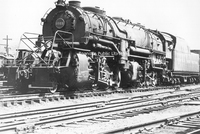
Engine No. 2023 was a Class Y-3 locomotive. This was one of 50 built between 1919 and 1923.
HNWR067
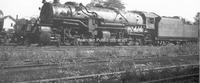
The Class Y-3A engines included No. 2058. These engines, numbering 2050 through 2079, were built in 1923. This photograph was taken in Cincinnati.
HNWR068
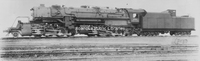
The Class Y-4 engines were developed by N&W in 1927. Only 10 were produced, with Engine No. 2087 among them.
HNWR069
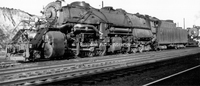
In an effort to heavier freight, N&W developed the Y-6 locomotive. While retaining many of the design elements of the previous Y models, the Y-6 had a new steel frame, roller bearings, and mechanical lubrication at 213 points. A peak horsepower of…
HNWR070
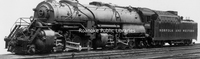
Engine No. 2156
HNWR071
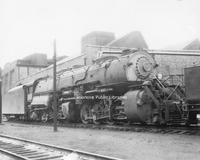
Between 1948 and 1952, 30 Class Y-6B engines were produced by N&W. Engine No. 2200, the last of the Y-6Bs, is shown here at Roanoke.
HNWR072
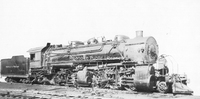
Engine No. 1438 was one of many Class Z-1A engines used by N&W. This particular engine was built in January 1916 in Schenectady, New York. These engines, numbered 1315 through 1438, were built between 1912 and 1917. A number of them were purchased…
HNWr073
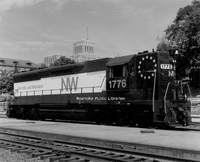
To join the celebration of the nation's bicentennial, N&W painted this diesel locomotive red, white, and blue. The engine's number was appropriately 1776.
HNWR074
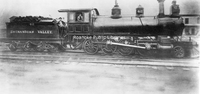
The Shenandoah Valley Railroad operated a 239-mile line from Hagerstown, Maryland to Roanoke, Virginia, which was completed in 1883. Norfolk & Western purchased the railroad in 1890. The Shenandoah Valley's president, Fredercik Kimball, would…
HNWR075
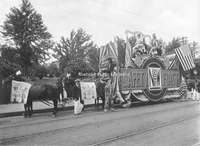
Union Local 440 entered this "Safety First" float in a Roanoke parade. It testifies to the cooperation by rail unions and officials to improve worker safety.
HNWR076
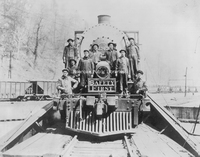
Safety became a paramount concern of the railroad. Pictured is the Eckman Shop Safety Committee on Engine No. 1343. In 1893, Congress passed the Railroad Safety Appliance Act and in 1916, rail employees won Congressional approval for an 8-hour work…
HNWR077
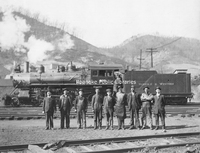
The shop gang of the Portsmouth (Ohio) Shop pose in front of Engine No. 600. In 1901, N&W purchased the Cincinnati, Portsmouth, and Virginia Railroad for $2.5 million. Portsmouth would become a major location in the future operations of N&W.
HNWR078
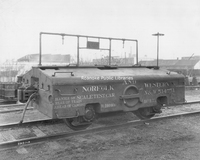
Some "cars" were used for necessary tests to properly maintain a railroad track. One example is the Scaletest Car in this photograph. The car was used to test the scales on the N&W system that weighed the rolling stock. Instructions on the car…
HNWR079
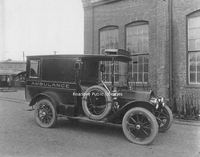
This N&W ambulance from the 1920s signifies the hazards of being a rail worker. In fact, N&W financed the hospital in Roanoke for its first two years of operation so rail families could get necessary medical services.
HNWR080
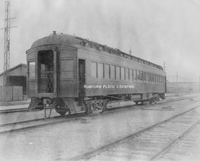
Passenger coaches went through numerous stages of development. From wood to steel construction, and from basic amenities to luxurious accomodations, the coach was designed for both comfort and safety. This is an early passenger coach used by N&W.
HNWR081
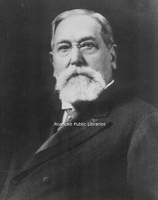
Henry Fink, president of N&W from 1895 until 1902, was the chief operating officer for Mahone's AM&O Railroad. A life-long bachelor, Fink had immigrated to the United States with his brother in 1851 and became a railroad engineer four years later. …
HNWR082
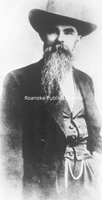
General William Mahone served as the president of the AM&O Railroad for its 10-year existence. Gen. Mahone first gained attention during the Civil War as a field commander, notorious for his unorthodox battle antics. Following the war, Mahone…
HNWR083
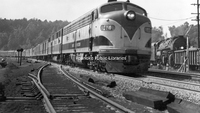
The Pocahontas moves east through Blue Ridge, Virginia pulled by Diesel No. 1014. The engine, though bearing the N&W name, was a diesel originally belonging to the Richmond, Fredericksburg, and Potomac. By the late 1950s, as the N&W was…
HNWR084
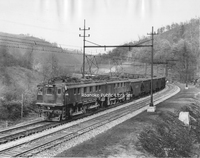
Electric engines were developed in 1914 so crews could safely navigate the tunnel at Coldale, West Virginia. Slow-moving steam engines choked the badly ventilated tunnel to the detriment of the crew's health. The electrified line ran between…
HNWR085
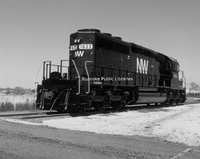
Diesel Engine No. 1633, photographed shortly after being built. Notice the railroad's last corporate logo, the more streamlined "NW". The white-on-black design was introduced by John Fishwick when he was the railroad's president in 1971.
HNWR086
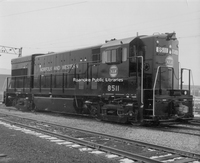
Diesel engines could operate more efficiently than the steam engine and American railroads were quick to make the switch. Between 1941 and 1955, the number of diesel locomotives in use went from 1,200 to 20,000. Pictured is Engine No. 8511.
HNWR087
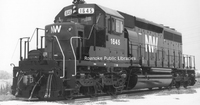
The diesel engine was developed in 1890 by Rudolph Diesel. The Central Railroad of New Jersey was the first to use a diesel locomotive in 1925. It was not until 1955 that N&W began to order diesel locomotives, primarily from American Locomotive…
HNWR088
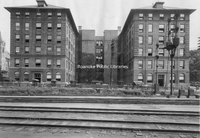
After the first N&W office building burned in 1896, this building took its place. Constructed on the same location as the old, one section was completed in 1896 and the other in 1907. The building is now used for upscale apartments.
HNWR089
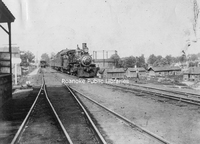
Passenger locomotive No. 29 pulls into the Winston-Salem yard in 1890. This train may have been operating on the former Roanoke and Southern track that was absorbed into the operations of N&W in 1892.
HNWR090
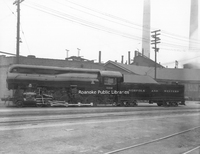
Engine No. 1100, a Class M-2, was one of a number of engines purchased by N&W in 1910. The Class M, as rebuilt, had a 4-8-0 wheel alignment, allowing it to meet the freight demands of the railroad.
HNWR091
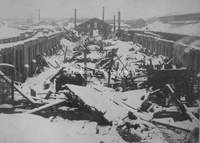
Given the hazards of early railroading, even Mother Nature did not cooperate at times. This image shows a collapsed car shop in Roanoke, a result of a heavy snow storm in 1890.
HNWR093
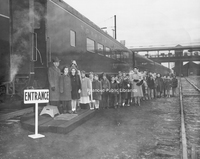
A school group lines up to board the Powhatan Arrow. The name of the train was the result of a contest conducted by N&W, wherein 140,000 entries were submitted. The winner of the $500 first place prize was an N&W retiree, Leonard A. Scott.
HNWR094
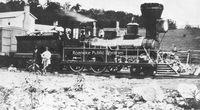
Virginia and Tennessee Railroad named rather than numbered their locomotives. This locomotive was Roanoke. Chartered in 1849 and completed in 1856, the V&T ran from Lynchburg to Bristol and later merged with the AM&O.
HNWR095
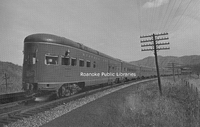
The Powhatan Arrow boasted the finest passenger service amenities when introduced, including a tavern-lounge car. Here the Arrow moves from Roanoke to Bluefield and was photographed at Singer, Virginia. The round-end tavern car, No. 581, allowed…
HNWR096
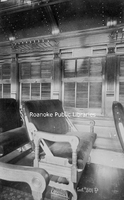
Called a "vestibule car", this interior shot shows passenger seating in an 1892 coach. Notice the window shutters, ornate interior design, and fold-down seats. Despite its comfortable feel, early trains of this era were unsafe and not that pleasant…
HNWR097
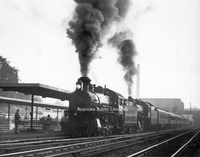
Engine No. 475 steams out of Roanoke. In 1946, the year considered to be the beginning of N&W's modern passenger service, an average ridership per train was 118. By 1971, when N&W discontinued passenger trains, the number had dropped to less than…
HNWR098
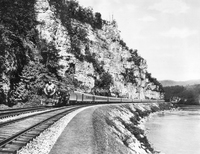
The Pocahontas traveling along the New River. This route was the most spectacular and difficult. After leaving the New River Valley, The Arrow climbed abruptly to Bluefield and then downhill along the Tug River at Williamson.
HNWR099
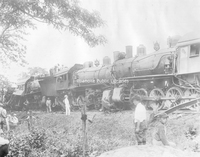
This head-on collision occurred at Rippon, Virginia. Engine No. 481 is at left.
HNWR100
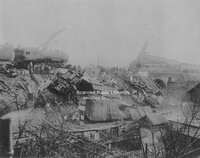
A closer view of the Thaxton wreck shows the debris pile. Engineer Pat Donovan's body was so badly mangled he was only identified by his clothing. The entire woodwork of the train was burned due to exploding gas lights in the coaches. Seven cars…
HNWR101
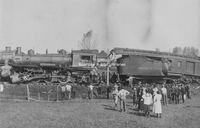
Engines No. 14 and No. 37 collided at Rural Retreat. Note the collapsed front half of the first baggage coach. While engines could often withstand collisions, the wood-constructed baggage and passenger coaches were extremely vulnerable.
HNWR102
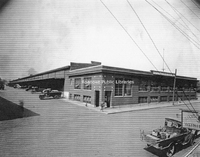
One of the largest freight depots along the N&W line was in Roanoke. Today, the freight depot is home to the Virginia Museum of Transporation, wherein are housed many N&W artifacts and archival material, as well as some steam engines in the outdoor…
HNWR104
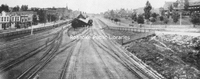
This view shows the early Roanoke passenger station (center),the N&W office building (center right), and the Hotel Roanoke (right).
HNWR105
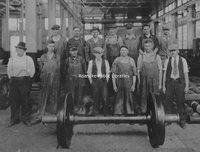
"Roanoke Wheel Shop 1927" is stamped on the axel of the car wheel displayed by the men of the wheel shop. Individuals unidentified.
HNWR107
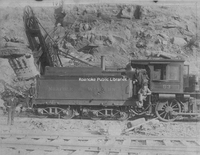
Engine No. 53 and her crew excavate for new track near Bluefield, West Virginia. N&W pioneered and financed early coal production in the mountains of West Virginia and carved the rail beds that allowed the "black gold" to move east.
HNWR108
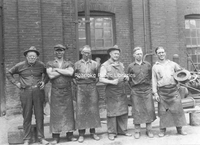
The blacksmith gang at the Bluefield Shops. Blacksmithing was rugged and often dangerous work, but a necessary trade to make the railroad operate. Individuals unidentified.
HNWR109
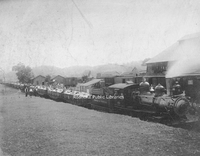
Freight Engine No. 173 of the Radford Yard is depicted at a Radford pipe shop.
HNWR110
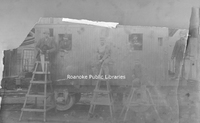
Employees of Roanoke Machine Works build a caboose. They are, left to right: W.E. Meadows, Ted Swain, William Patterson, R.L. Daddow, R.L. Funk, and T.S. Jones.
HNWR111
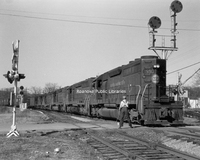
Diesel Engine No. 1590 passes through Buena Vista, Virginia. Notice the train order raised to be grabbed by the engineer as the train passes.
HNWR112
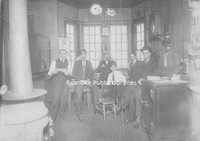
This is an unidentified station office. Pictured left to right are: C.E. Moore, C.C. McPherson, W.L. Bingham, Harvey Call, and W.G. Light.
HNWR113
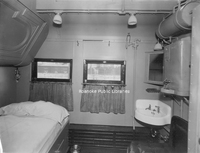
An interior view of a sleeper car.
HNWR114
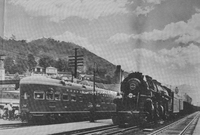
This image symbolizes the commercial ventures of N&W - a coal train enters the picture as a passenger train, the Powhatan Arrow, leaves. Engine No. 1213 is westbound out of Williamson, West Virginia, to deliver coal to the Great Lakes region. The…
HNWR115
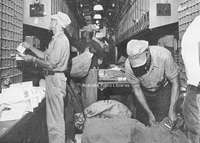
Unidentified men work in a standard rail mail car. The United States Postal Service discontinued use of the railroad post office in 1967.
HNWR116
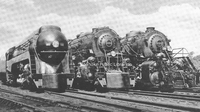
This photograph includes three types of modern, coal-burning steam locomotives designed and built by N&W. These represent the best elements of steam engine design: low initial investment, high utilization, low-cost operation and maintenence, and…
HNWR119
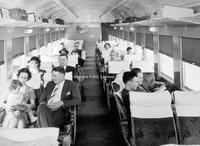
Passengers enjoy a ride on a N&W coach.
HNWR120
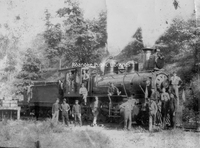
Engine No. 17 is surrounded by rail employees in this photograph taken near Elkton, West Virginia. On the ground at the extreme left is G.W. Pile; standing fourth from the left is H.S. Walker; standing second from the right is C.C. Edmondson; and…
HNWR121
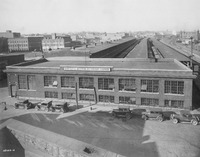
One of the largest freight depots along the N&W line was in Roanoke. Today, the freight depot is home to the Virginia Museum of Transporation, wherein are housed many N&W artifacts and archival material, as well as some steam engines in the outdoor…
HNWR122
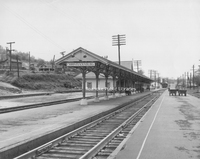
The station at Christiansburg, Virginia awaits freight and passengers. Note the mail and express carts to the right.
HNWR123
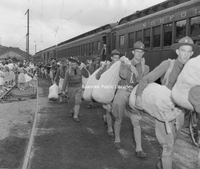
The N&W, like all major railroads, served its country well during World War II for the movement of troops and military freight. In fact, passenger service reached its zenith during wartime. While the exact location of this scene is unknown, it…
HNWR124
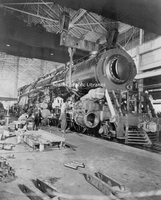
Employees repair an N&W locomotive at the Roanoke Shops.
HNWR125
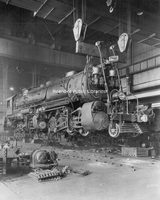
An interior view of the erecting shop at Roanoke showing an engine's assembly in progress.
HNWR126
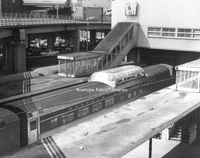
Taken from the Roanoke passenger station, this photograph shows the Birmingham Special in the background and the Pocahontas in the foreground..
HNWR127
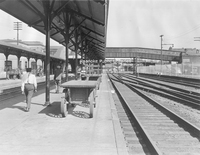
Shown here is the back, lower level of the Roanoke passenger station three years before the Raymond Loewy renovation.
HNWR128
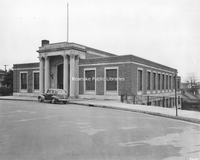
The N&W passenger station at Winston-Salem, North Carolina.
HNWR129
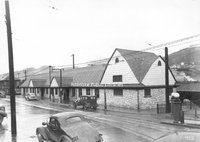
The N&W station at Bluefield, West Virginia.
HNWR131
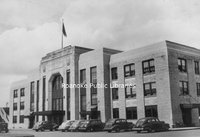
The N&W station at Portsmouth, Ohio.
HNWR132
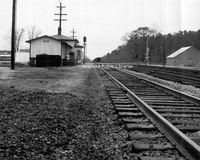
The depot in Ivor, Virginia.
HNWR133
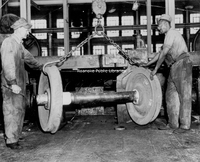
Two employees examine car wheels at the Roanoke Shops. C.G. Wiley is at right; the man at left is unidentified. Unfortunately, African American employees of the N&W could not be promoted beyond entry-level positions until the passage of the Civil…
HNWR134
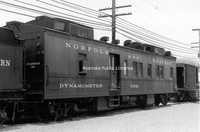
The Dynamometer was pulled by locomotives to determine their actual horsepower and potential speeds. Such calculations were extremely important for effeciently moving freight over different grades and distances. The ability of the locomotive to do…
HNWR135
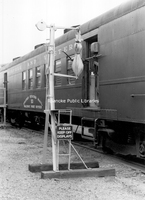
Here, a former N&W mail car is a museum display. Notice the period mail bag hanging from its post. As the train would pass, the mail clerk would position the hook, grab the bag, and then begin the sorting process inside the car.
HNWR136
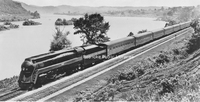
The Powhatan Arrow on one of its runs. The Arrow traveled along a diverse scenic route through Virginia's Dismal Swamp, the Blue Ridge Mountains, the Alleghanies, and into the West Virginia coal fields.
HNWR137
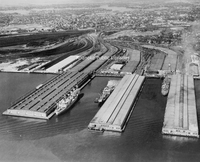
Aerial photograph of N&W freight docks at Lambert's Point near Norfolk.
HNWR138
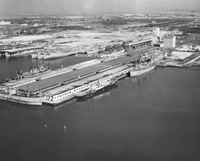
Coal was not the only export transported by N&W. This image shows freight docks and a grain elevator at Sewall's Point at Norfolk. Pier A is in center foreground.
HNWR139
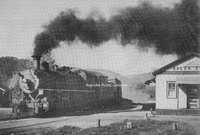
Engine No. 382 runs the steepest grade of all - a sustained three percent grade to the summit at White Top Station. This run, affectionately known as the "Virginia Creeper", ran between Abingdon, Virginia and West Jefferson, North Carolina. Here,…
HNWR140
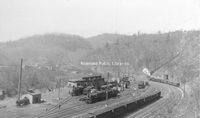
A small coal yard in West Virginia. N&W pioneered and developed the state's coal industry.
HNWR141
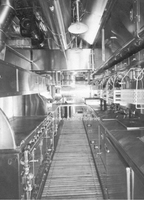
When passenger services encompassed long distances, dining service was offered. While cooks had to operate in a relatively confined space, they prepared full-course meals as good as any fine restaurants.
HNWR142
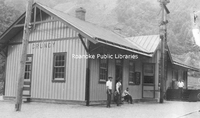
The depot at Grundy, Virginia was reminiscent of many rural depots that lined the tracks of the N&W.
HNWR143
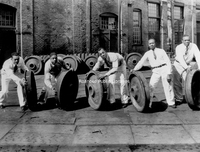
The "Wheel Rollers" of the Roanoke Shops include (front left): Earl Dunning, John Cantry, Charles Wiley, Monk Wiggins, and Thomas Campbell. The Wheel Rollers competed in wheel rolling competitions around the nation and always placed high.
HNWR144
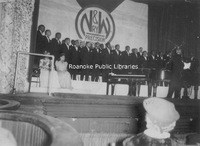
The Norfolk and Western Male Chorus consisted of African American employees who toured and performed hundreds of concerts. Here, the chorus performs at Roanoke's Academy of Music. The chorus was of such a high caliber that one needed an audition to…
HNWR145
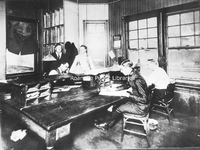
The old car record office at Portsmouth, Virginia. Shown from left are: Floyd Chabot (seated), Paul Jones, S.A. Highfield, H.H. Hester, and John Farley.
HNWR146
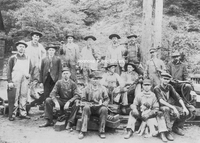
Car yardmen at Kimball, West Virginia. As the coal mines opened, the number of men employeed by N&W soared, bringing economic opportunity to many West Virginia families.
HNWR147
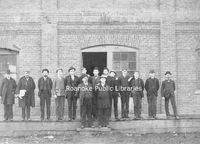
One of N&W's largest freight stations was in Roanoke. Depicted are unidentified freight station employees. The average annual wage for railroad workers in America at the turn of the century was $740, much higher than the average American wage.
HNWR148
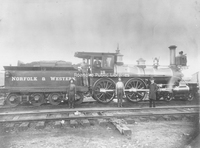
The crew of Engine No. 19. This engine, like most of the engines used by N&W in its infancy, was built by Baldwin Locomotive Works.
HNWR149
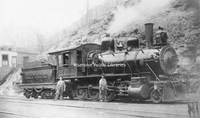
An early example of freight locomotives used by N&W was Engine No. 264.
HNWR150
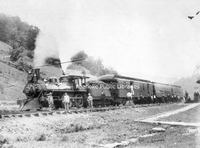
Class Q Engine No. 516 pulls into a depot at Nolan, West Virginia. The engine was originally put into service in April 1882. Crew members are servicing both passenger and express cars.
HNWR151
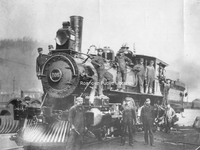
Shop employees and crew of Engine No. 205 in Roanoke, shortly after the locomotives construction.
HNWR152
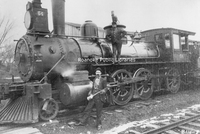
Engine No. 54 with her crew (from left): Engineer E.H. Jones, Fireman Guy Emery, and Conductor Lloyd Pugh. The train was running between Sardinia and Hillsboro branch, and the main line of the Cincinnati, Portsmouth, and Virginia Railroad.
HNWR153
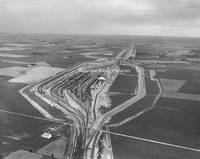
An aerial view of Bellevue Yard in Ohio, looking east. The classification yard is at left center and immediately to the right is the car repair facility. In the distance are the receiving and departure yards.
HNWR154
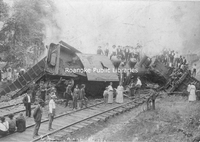
Wreck at Powhatan, West Virginia. Notice the double-tracking in the image. Unfortunately, the development of adequate rail safety technology was years from completion, making railroading a dangerous profession.
HNWR155
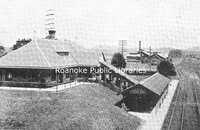
A postcard image of the N&W depot at Salem, Virginia. The depot still remains, although the shed at the tracks was dismantled many years ago. During the 1930s, depots like this dotted the lines of the N&W. Few remain today, either abandoned or in…
HNWR158
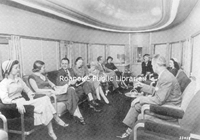
Interior view of a typical N&W lounge car.
HNWR159
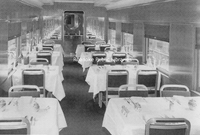
Interior view of a typical N&W dining car.
HNWR160
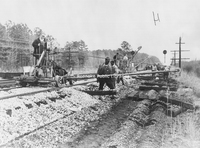
Here is but one example of how mechanization assisted significantly in the maintenance of tracks. A machine removes cross ties for the crew.
HNWR161
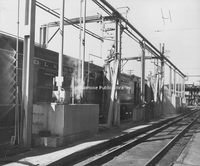
To keep passenger coaches looking good, the railroad regularly sent them through a mechanical washing facility.
HNWR162
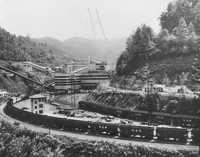
Freight cars line up outside a coal-cleaning and prep plant near Gary, West Virginia. The N&W relied heavily on many of the larger coal mines and facilities throughout West Virginia.
HNWR163
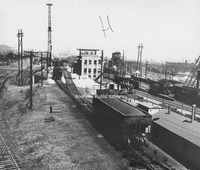
A hopper car loaded with coal coasts down the "hump" incline toward classification tracks at the Portsmouth, Ohio freight yard. This car is half-way through the master retarder. The scale house and assistant yard master's office are located in the…
HNWR164
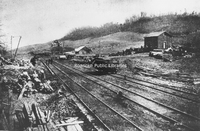
The Bluefield Yard in 1888. In that year, the N&W organized
HNWR165
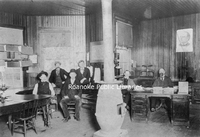
The Portsmouth Freight Office included (from left): L.M. Dory, Gus Kehrer, Fred Dressler, S.R. Crawford, T.M. O'Connor, and Theodore Doty.
HNWR166
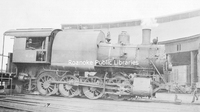
This engine was a Class W-1, 2-8-0 type and was originally built by the Roanoke Shops in October 1900.
HNWR167
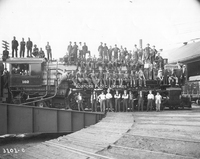
Engine No. 102 rolls out of assembly at the Roanoke Shops and employees pose for the customary photograph of the engine.
HNWR168
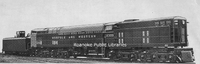
The "Jawn Henry" was the nickname for this combination steam-electric locomotive. It was N&W's last-ditch effort to give steam one last try. The engine had 12 traction motors, weighed in at 1.1 million pounds, and was 161 feet long. Delivered in…
HNWR170
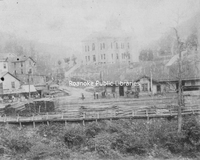
Welch, West Virginia. The old N&W station is in the foreground; the courthouse is atop the hill and businesses are at left.
HNWR172
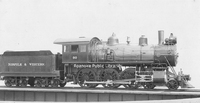
Passenger Engine No. 90 was an example of many engines purchased by N&W in its early years from Baldwin Locomotive Works. Engine No. 90 was a Class A engine.
HNWR173
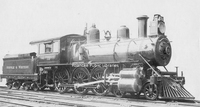
Engine No. 72 is another example of a Class U locomotive built by Baldwin Locomotive Works in 1892. This passenger locomotive weighed in excess of 132,000 pounds and was later converted to simple cylinders.
HNWR174
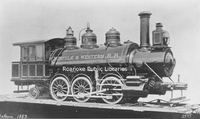
Engine No. 93 was a small shifting engine used at Roanoke Machine Works. It was built by Baldwin Locomotive Works in 1883.
HNWR175
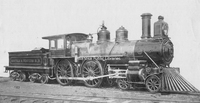
The old Class M engine was built by Baldwin Locomotive Works in 1883. N&W owned two of these engines, Nos. 94 and 95, as shown here.
HNWR176
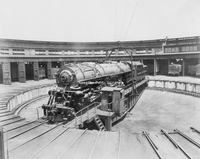
Freight Locomotive No. 1203 rests on the turntable at Shaffer's Crossing in Roanoke.
HNWR177
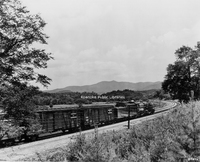
A stock train rolls through the Virginia countryside. As a way to encourage agribusiness, N&W operated a working farm at Ivor, Virginia for some years around 1910-1915.
HNWR178
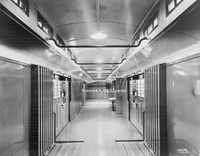
An interior view of an express car used by N&W. Express cars held all kinds of freight, from passenger baggage to commercial merchandise.
HNWR179
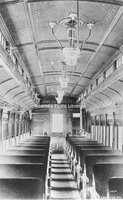
An interior view of a N&W passenger coach. Notice the oil lamps. Although beautiful design features, these lamps would often shatter during an accident, spilling their fuel into the car. Resultant fires sometimes killed more passengers than the…
HNWR180
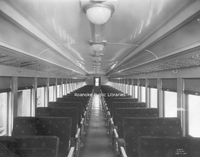
Passenger coaches changed significantly over time. Once elaborate and finely appointed coaches evolved into more basic design, as seen in passenger coach No. 1650.
HNWR181

Passenger coach No. 1700.
HNWR182
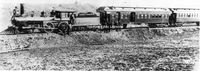
This passenger train stops in Ivanhoe, Virginia. Passenger service would serve as a popular form of distance travel until the emergence of the automobile.
HNWR183
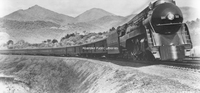
The Class J 600 is pulling a Southern Railway streamlined passenger train. The Class Js were built between 1941 and 1950.
HNWR184
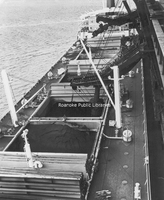
This photograph shows one of the largest loads of coal cargo on a single ship at Lambert's Point. A total of 493 carloads were required.
HNWR185
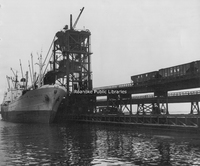
Loaded coal cars await their turn at the car-dumping machine. Upwards of 400 cars of coal are required to fill the large colliers.
HNWR186
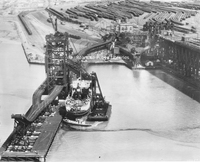
Norfolk & Western always kept a spare for every part necessary to cargo operations.
HNWR187
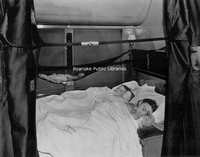
An interior view of a Pullman car after being made into a sleeper.
HNWR188
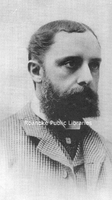
Frederick J. Kimball was one of the most forward-thinking of the early N&W presidents. He was so respected, the citizens of Big Lick voted to change its name to Kimball in his honor. He declined and suggested the location be called Roanoke, which…
HNWR189
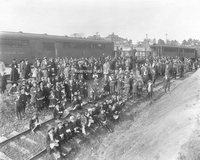
This photograph of a bygone era shows a racehorse car with an auction occurring on the platform car. Taken by George Davis of Roanoke, it hints at the possible location of the auction. There were several racehorse tracks in the Roanoke Valley at…
HNWR190
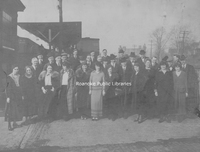
Employees of the Roanoke freight office.
HNWR191
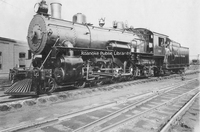
Engine No. 550 is a later example of the steam locomotive used by N&W. The crew poses for a picture in Roanoke.
HNWR192
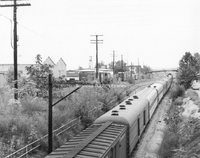
The Birmingham Special moves northbound, having detoured through Waynesboro, Virginia, on account of a washout on the Southern Railway's main line between Monroe, West Virginia and Charlottesville, Virginia. The Special was among a number of other…
HNWR193
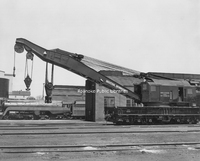
An industrial hoist rests in the yard at Roanoke. Notice the huge pulleys hanging from the arm. Engine No. 131 is in the background.
HNWR194
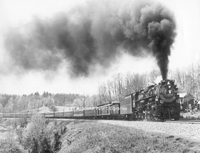
Norfolk & Western's passenger service ceased in 1971. Here is the Pocahontas on her last run, traveling eastbound at Blue Ridge, Virginia. An estimated 100,000 spectators lined the route to catch a glimpse of a passing era.
HNWR195
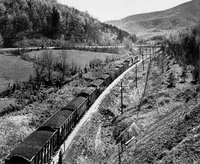
This consist of coal includes some hoppers from the Virginia Railway, which had been acquired by N&W in 1959.
HNWR196
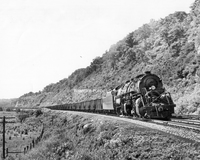
Engine No. 2146 pulls a load of coal. In the 1940s, N&W served the following seven coal districts: Kenova, Thacker, Tug River, Pocahontas, Clinch Valley 1 & 2, and Radford.
HNWR197
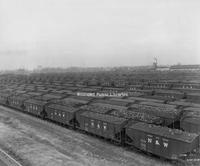
This is the view across the flat yard at Norfolk, Virginia. Hoppers would wait in the yard to be emptied.
HNWR198
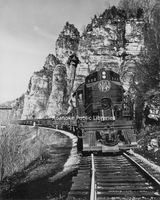
Diesel Engine No. 322 pulls a consist of coal through Virginia. The switch to diesel was difficult for N&W given its commercial investment in coal.
HNWR199
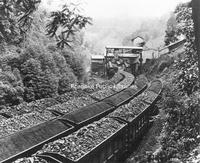
Loaded coal cars awaiting shipment from an N&W coal tipple. Note the different grades of coal being loaded. During World War II, the United States Navy almost exclusively used N&W coal for its Atlantic fleet.
HNWR202
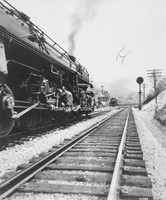
Two N&W locomotives prepare to pass one another heading to and from the West Virginia coal fields.
Oral History Interview with Larry Forrest

Interviewer: Princess Carter
Interviewee: Larry Forrest
Date: 15 March 2018
Duration: 50:08
Transcription prepared by: Princess Carter
Interviewee: Larry Forrest
Date: 15 March 2018
Duration: 50:08
Transcription prepared by: Princess Carter
Oral History Interview with Anton Black
Interviewer: Caitlyn Lewis; Kitty Bridgewater
Interviewee: Anton Black
Date: 22 February 2018
Duration: 66:22
Transcription prepared by: Caitlyn Lewis
Interviewee: Anton Black
Date: 22 February 2018
Duration: 66:22
Transcription prepared by: Caitlyn Lewis
Oral History Interview with Miss Grace Kelly
Interviewer: Ashleigh Griffin; Princess Carter
Interviewee: Miss Grace Kelly
Date: 24 February 2018
Duration: 1:41:40
Transcription prepared by: Ashleigh Griffin
Interviewee: Miss Grace Kelly
Date: 24 February 2018
Duration: 1:41:40
Transcription prepared by: Ashleigh Griffin
Oral History Interview with Carolyn Sue Wilson
Interviewer: Kitty Bridgewater
Interviewee: Carolyn Sue Wilson
Date: 25 February 2018
Duration: 1:22:48
Transcription prepared by: Kitty Bridgewater
Interviewee: Carolyn Sue Wilson
Date: 25 February 2018
Duration: 1:22:48
Transcription prepared by: Kitty Bridgewater
A Guide to the Mary Burks Dean Collection
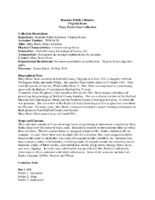
This collection consists of 6 record storage boxes of genealogical information compiled by Mary Burks Dean over the course of many years. Included is research on her ancestral lines as well as those of others. The information herein is arranged as…
Virginia Appalachian Notes, Volume 1, Number 1
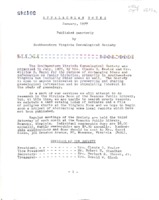
Virginia Appalachian Notes was published quarterly by the Southwestern Virginia Genealogical Society.
Virginia Appalachian Notes, Volume 1, Number 2
Virginia Appalachian Notes was published quarterly by the Southwestern Virginia Genealogical Society.
Virginia Appalachian Notes, Volume 1, Number 3
Virginia Appalachian Notes was published quarterly by the Southwestern Virginia Genealogical Society.
Virginia Appalachian Notes, Volume 1, Number 4
Virginia Appalachian Notes was published quarterly by the Southwestern Virginia Genealogical Society.
Virginia Appalachian Notes, Volume 2, Number 1
Virginia Appalachian Notes was published quarterly by the Southwestern Virginia Genealogical Society.
Virginia Appalachian Notes, Volume 2, Number 2
Virginia Appalachian Notes was published quarterly by the Southwestern Virginia Genealogical Society.
Virginia Appalachian Notes, Volume 2, Number 3
Virginia Appalachian Notes was published quarterly by the Southwestern Virginia Genealogical Society.
Virginia Appalachian Notes, Volume 2, Number 4
Virginia Appalachian Notes was published quarterly by the Southwestern Virginia Genealogical Society.
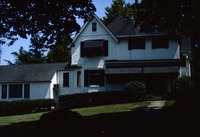
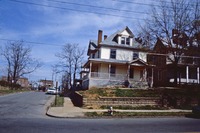
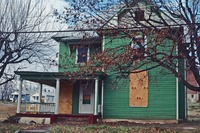
RRHA4
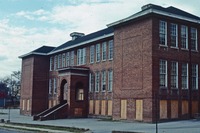
Harrison School
RRHA5
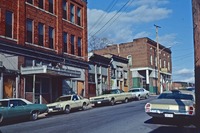
A view of Henry Street. The Palace Hotel can be seen in the background.
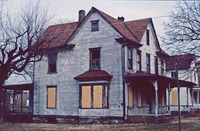
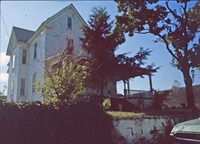
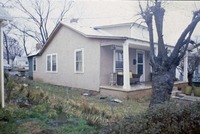
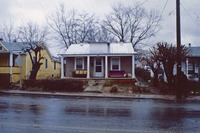
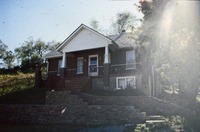
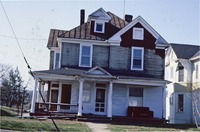
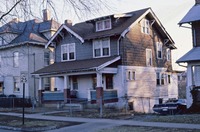
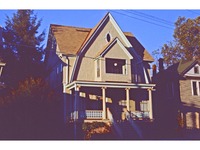
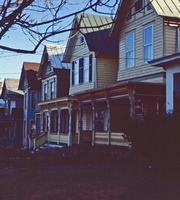
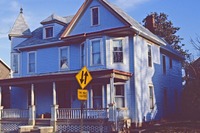
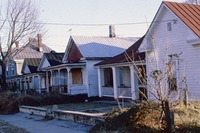
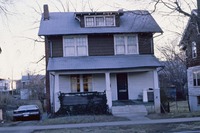
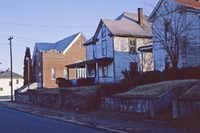
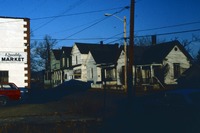
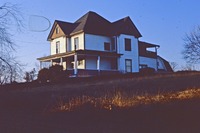
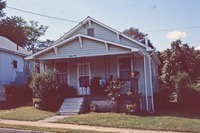
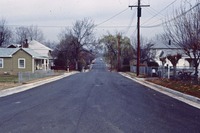
RRHA24
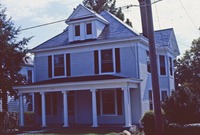
Gilmer
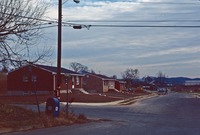
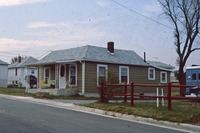
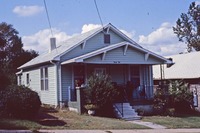
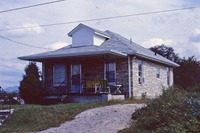
RRHA53
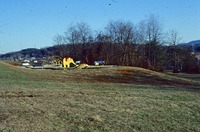
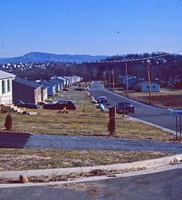
Morningside Park
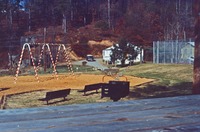
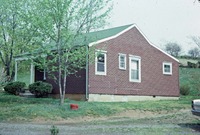
RRHA66
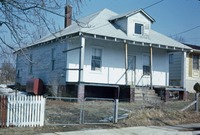
Riverdale
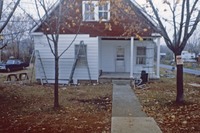
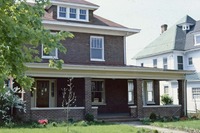
RRHA69
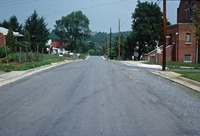
Riverdale
RRHA70
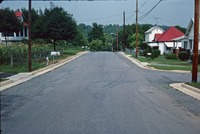
Riverdale
RRHA71
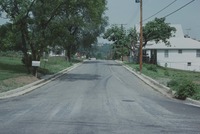
Riverdale
RRHA73
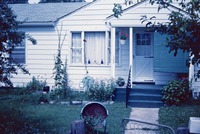
Riverdale
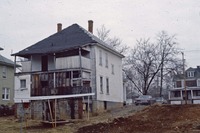
RRHA75
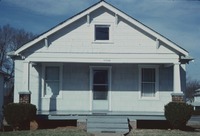
Riverdale
RRHA77
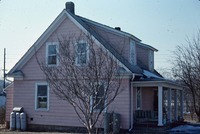
Riverdale
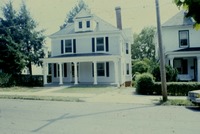
RRHA83
Riverdale
RRHA84
Riverdale
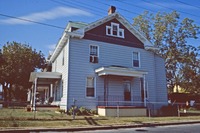
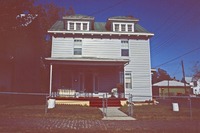
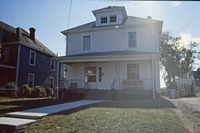
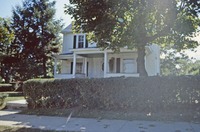
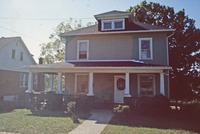
RRHA104
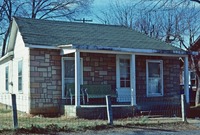
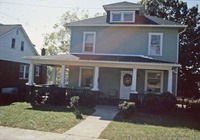
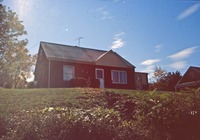
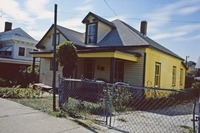
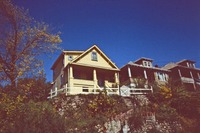
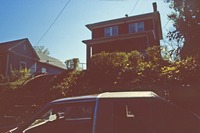
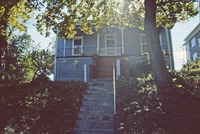
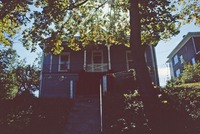
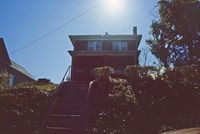
Riverdale
Virginia Appalachian Notes, Volume 3, Number 1
Virginia Appalachian Notes was published quarterly by the Southwestern Virginia Genealogical Society.
Virginia Appalachian Notes, Volume 3, Number 2
Virginia Appalachian Notes was published quarterly by the Southwestern Virginia Genealogical Society.
Virginia Appalachian Notes, Volume 3, Number 3
Virginia Appalachian Notes was published quarterly by the Southwestern Virginia Genealogical Society.
Virginia Appalachian Notes, Volume 3, Number 4
Virginia Appalachian Notes was published quarterly by the Southwestern Virginia Genealogical Society.
Virginia Appalachian Notes, Volume 4, Number 1
Virginia Appalachian Notes was published quarterly by the Southwestern Virginia Genealogical Society.
Virginia Appalachian Notes, Volume 4, Number 2
Virginia Appalachian Notes was published quarterly by the Southwestern Virginia Genealogical Society.
Virginia Appalachian Notes, Volume 4, Number 3
Virginia Appalachian Notes was published quarterly by the Southwestern Virginia Genealogical Society.
Virginia Appalachian Notes, Volume 4, Number 4
Virginia Appalachian Notes was published quarterly by the Southwestern Virginia Genealogical Society.
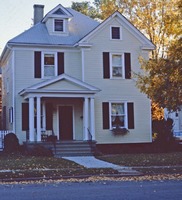
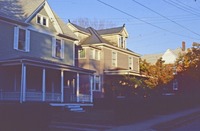
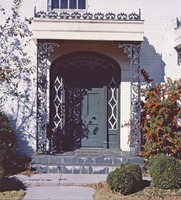
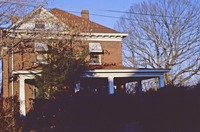
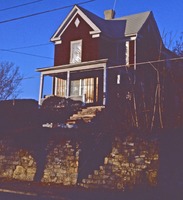
RRHA124
Southwest
RRHA134
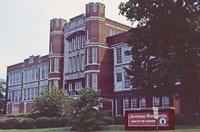
Jefferson High School
RRHA135
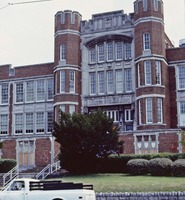
Jefferson High School
RRHA136
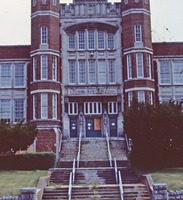
Jefferson High School
RRHA140
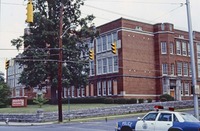
Jefferson High School
RRHA142
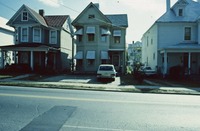
Rehab
RRHA143
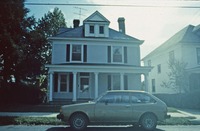
Rehab
RRHA144
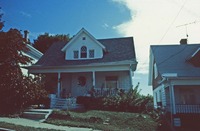
Rehab
RRHA145
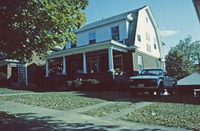
Rehab
RRHA146
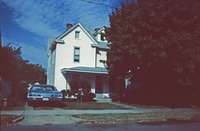
Rehab
RRHA147
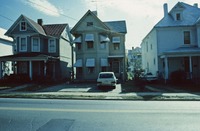
Rehab
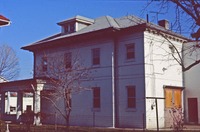
RRHA154
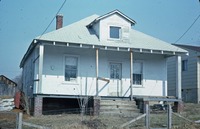
Riverdale
RRHA162
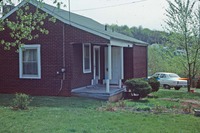
Riverdale
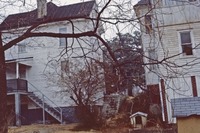
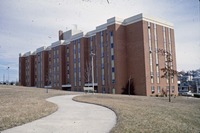
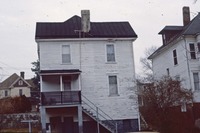
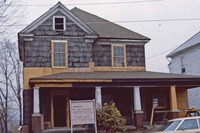
RRHA170
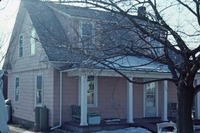
Riverdale
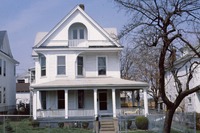
RRHA172
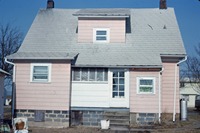
Riverdale
RRHA173
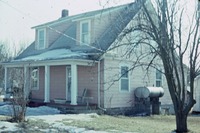
Riverdale
RRHA174
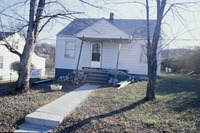
Riverdale
RRHA175
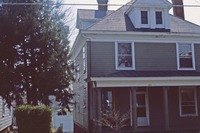
Southwest
RRHA176
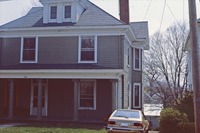
Southwest
RRHA177
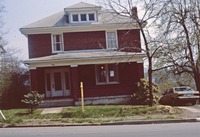
Southwest
RRHA180
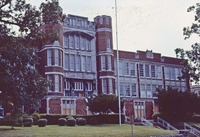
Jefferson High School
RRHA181
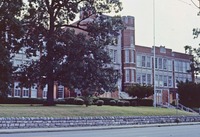
Jefferson High School
RRHA183
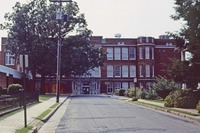
Jefferson High School
RRHA184
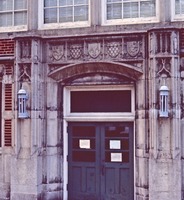
Jefferson High School
RRHA185
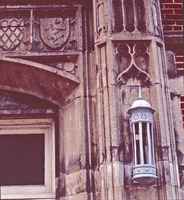
Jefferson High School
RRHA186
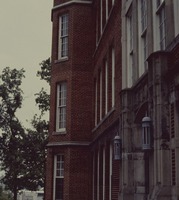
Jefferson High School
RRHA187
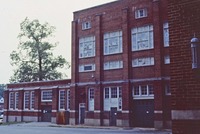
Jefferson High School
RRHA188
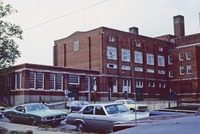
Jefferson High School
RRHA189
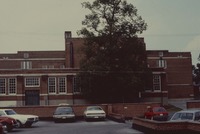
Jefferson High School
RRHA190
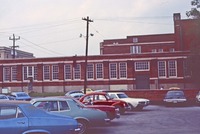
Jefferson High School
RRHA191
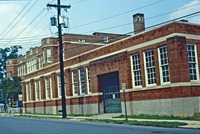
Jefferson High School
RRHA192
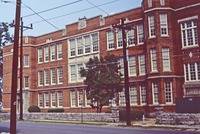
Jefferson High School
RRHA193
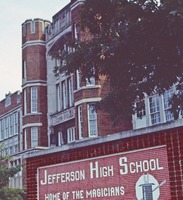
Jefferson High School
RRHA194
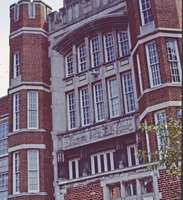
Jefferson High School
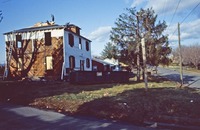
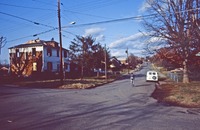
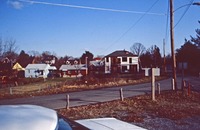
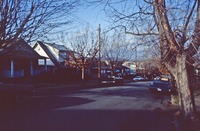
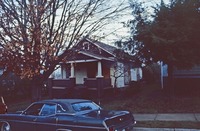
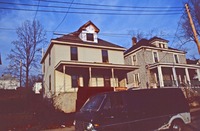
RRHA203
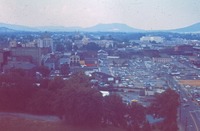
Downtown East
RRHA204
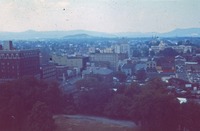
Downtown East
RRHA205
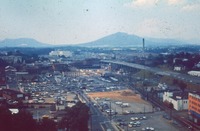
Downtown East
RRHA206
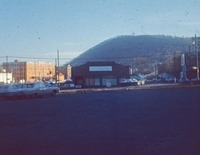
Downtown East
RRHA207
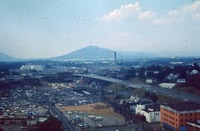
Downtown East
RRHA208
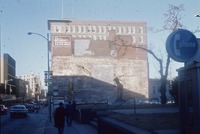
Downtown East
RRHA209
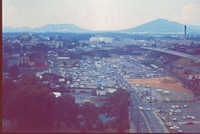
Downtown East
RRHA210
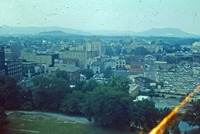
Downtown East
RRHA211
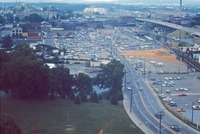
Downtown East
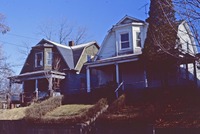
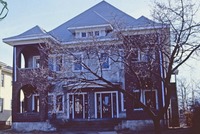
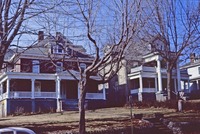
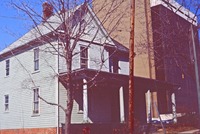
RRHA216
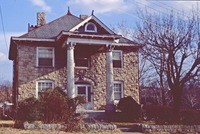
The Stone House, located at 914 13th Street next to Black Dog Salvage.
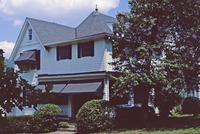
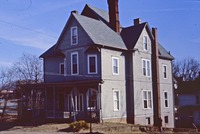
RRHA219
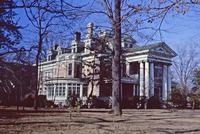
Mountain View
A Guide to the Giles County Poll Books Collection, 1809-1923
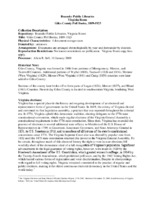
This is a guide to the poll books of Giles County, which cover the years 1809-1923. Poll books contain election returns for local, state, and national government; votes on state issues include infrastructure improvements to bridges, roads, the…
A Guide to the Giles County Tithe Books Collection
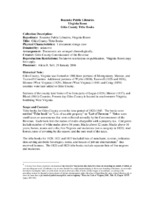
This a guide to the Tithe books for Giles County, which cover the time period of 1820-1845. The tithe books were entitled “Tithe Book” or “List of Taxable Property” or “List of Revenue.” Tithes were small taxes or assessments that were collected…
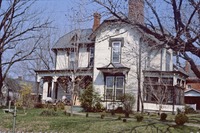
RRHA226
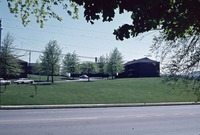
Riverdale
RRHA227

Riverdale
RRHA228

Riverdale


RRHA247

Riverdale
RRHA248

Riverdale


RRHA259

Detail of the entrance to the Stone House, located at 914 13th Street next to Black Dog Salvage.

RRHA261

Allison Avenue
RRHA262

Allison Avenue
RRHA263

Allison Avenue
RRHA264

13th Street, Southwest.


RRHA279

Kirk Avenue


